Introduction
Adults have several orthodontic choices, including clear aligners, metal, ceramic, and lingual braces. Tailored treatment plans consider each patient’s bite, aesthetic goals, and oral health. Tigani Family Dentistry offers personalized care with in‑house lab support and convenient financing options available.
Understanding Treatment Timelines and Effectiveness
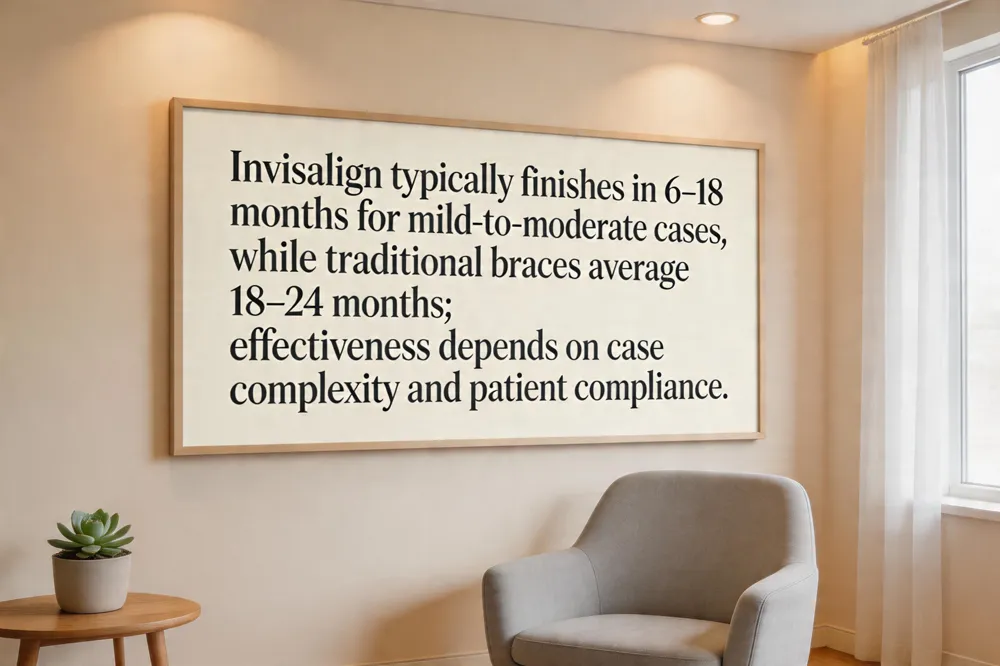 Invisalign vs. braces timeline Invisalign treatments typically last 12–18 months for mild‑to‑moderate cases, with some simple cases finishing in 6–9 months. Traditional metal braces average 18–24 months, though very mild cases can be done in about a year. Aligners require 20–22 hours of daily wear; missed time can extend treatment. Braces are fixed 24/7, reducing compliance concerns but may take longer for complex movements.
Invisalign vs braces effectiveness Both appliances can straighten teeth and improve bite function, but effectiveness varies with case complexity. Invisalign works well for mild to moderate misalignments, offering a virtually invisible, removable solution that many patients find comfortable. However, strict compliance is essential. Traditional metal or ceramic braces provide continuous, precise force and are more reliable for severe crowding, major bite corrections, and complex tooth movements.
Aligners vs braces which is faster For straightforward, mild to moderate cases, clear aligners often finish sooner (6–18 months) because they can move several teeth at once and are changed every two weeks. More complex cases usually require braces, which take 20–24 months. Speed depends heavily on patient compliance.
Invisalign vs braces which is better The choice depends on orthodontic issues and lifestyle. Invisalign offers invisibility and ease of oral hygiene for mild‑to‑moderate cases, while braces provide greater control for severe problems. Cost, compliance, and aesthetic preferences also play roles.
Is Invisalign better than braces for adults Adults often prefer Invisalign for its discreet appearance and removable nature, which simplifies eating and cleaning. However, for severe crowding or major bite corrections, traditional braces (including ceramic or lingual options) may be more effective. The optimal option is determined by an individualized evaluation at Tigani Family Dentistry.
Before and After: Visualizing Outcomes
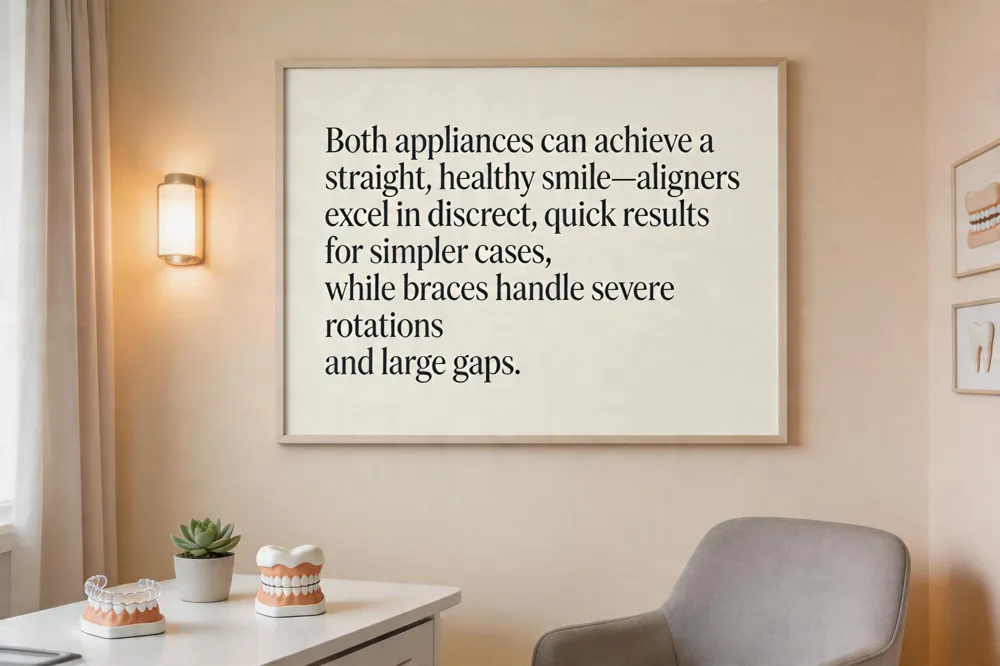 Invisalign vs braces before and after: Both start with a comprehensive assessment—photos, digital scans, and a customized plan to correct crowding, gaps, or bite issues. Traditional braces are bonded with metal or ceramic brackets, which are immediately visible, while Invisalign uses a series of virtually invisible, removable aligners. During treatment, braces may cause soreness after adjustments and require dietary restrictions; Invisalign aligners can be removed for meals and oral hygiene, reducing discomfort and plaque buildup. After treatment, both can achieve a straight, healthy smile—braces excel at complex movements such as severe rotations or large gaps, whereas Invisalign delivers a discreet, natural‑looking result for mild to moderate cases.
Clear aligners before and after: Prior to treatment, teeth may be crowded, spaced, or rotated. Custom clear aligners, fabricated in‑house at Tigani Family Dentistry, gently shift each tooth, with noticeable changes within months. After the series, the smile is uniform, with no visible appliances.
Adult braces before and after: Adults often begin with crowding, bite mis‑alignments, or worn teeth. After personalized braces or aligner therapy, teeth are properly spaced, the bite balanced, and oral hygiene easier, boosting confidence and comfort.
Invisalign: Clear, removable trays made from SmartTrack® material are worn 20–22 hours daily, changed every 1–2 weeks, and monitored via ClinCheck® and My Invisalign™ app. Treatment is typically faster and more comfortable than braces, with no food restrictions.
Can I kiss my boyfriend with Invisalign? Yes—thin, smooth trays fit snugly and are invisible, posing no risk of poking. You may remove them briefly for intimacy, but return them within the recommended wear time.
Are dentists ever not recommend Invisalign? Yes—severe crowding, large gaps, complex rotations, or underlying gum disease may exceed aligner capabilities, and strict patient compliance is essential; in such cases, fixed braces are preferred.
Clear aligners vs Invisalign: Clear aligners are a broad category of transparent trays; Invisalign is a specific brand using SmartTrack® material and proprietary 3‑D planning, offering advanced software and professional supervision compared with generic aligner kits.
Comfort, Compliance, and Lifestyle Considerations
 Adult patients must be disciplined when choosing clear aligners because they need to be worn 20–22 hours a day; missing wear time can extend treatment or compromise results. This high compliance requirement is a key disadvantage compared with Traditional braces work continuously once placed. On the upside, removable aligners make oral hygiene far easier—brushing and flossing can be done without navigating brackets or wires, reducing plaque buildup and gum inflammation. Braces, in contrast, demand meticulous cleaning around brackets and often require special tools, increasing the risk of gum disease if not performed correctly.
Dietary freedom is another lifestyle factor: aligner wear can be taken out for any meals, eliminating the food restrictions that accompany metal or ceramic braces (e.g., avoiding sticky candies, hard nuts, or crunchy snacks). This also means fewer emergencies caused by broken brackets.
Soft‑tissue irritation tends to be milder with aligners because the smooth plastic does not rub the cheeks or lips, whereas braces can cause sores, excess saliva, and tongue discomfort.
Kissing and social interactions are less awkward with aligners—the trays are virtually invisible and do not interfere with a kiss, and they can be briefly removed for intimacy without jeopardizing treatment as long as the daily wear target is met.
In summary, clear aligners excel in aesthetics, comfort, and convenience for mild‑to‑moderate cases, while traditional braces remain the gold standard for complex movements, offering continuous force without reliance on patient compliance.
Cost, Insurance, and Financial Planning
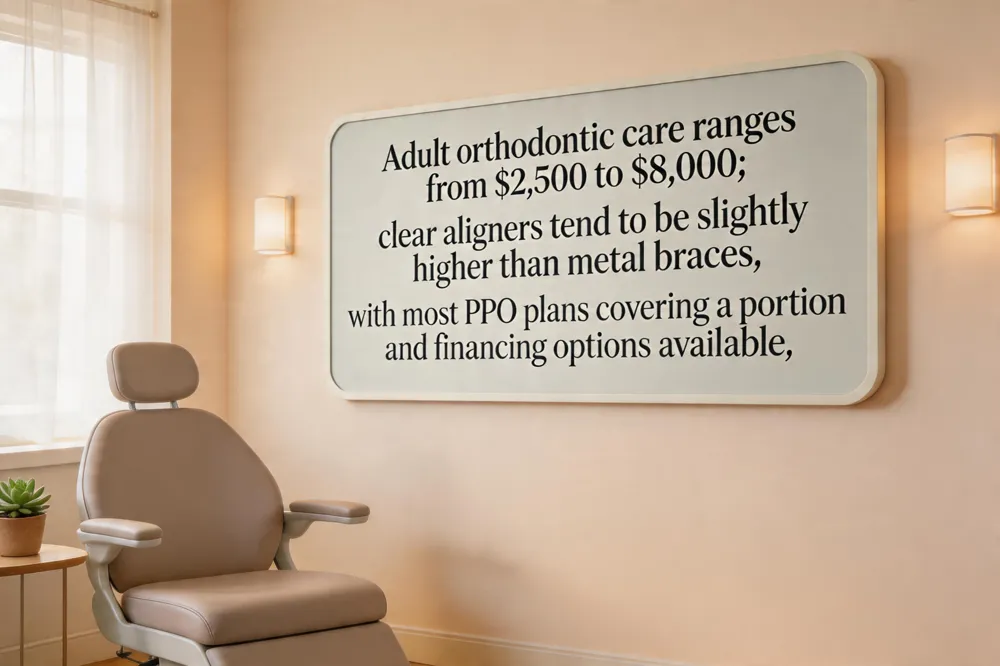 Clear aligner therapy for adults typically costs between $3,000 and $7,000, with premium systems such as Invisalign averaging around $6,000; milder cases can be as low as $3,000 while more extensive treatments may exceed $8,000. Traditional metal braces are usually a bit cheaper, ranging from $2,500 to $6,000, while ceramic, lingual, or self‑ligating options can push the price toward the upper end of the $2,500‑$8,000 spectrum. Most PPO dental plans, including those accepted at Tigani Family Dentistry, provide a portion of the orthodontic fee—often a fixed annual maximum or a percentage after the deductible—so patients should verify their specific benefits before starting treatment. To make the out‑of‑pocket expense more manageable, many offices offer financing solutions such as CareCredit, monthly payment plans, and the use of HSA/FSA accounts. Tigani’s in‑house laboratory speeds fabrication of brackets, wires, and aligner trays, reducing lab fees and overall treatment cost. Together, these insurance options and the in‑house lab help keep adult orthodontic care affordable while delivering the same high‑quality results.
Health Impacts and Long‑Term Effects
 Both traditional braces and clear aligners can produce side effects, but permanent damage is rare when treatment is supervised by an experienced orthodontist. The most common long‑term concern is root resorption—a slight shortening of tooth roots that usually does not affect function but can be minimized with gentle forces and regular radiographic monitoring. Neglecting oral hygiene around brackets can lead to gum recession and enamel demineralization, which may become permanent staining or decay if plaque is not removed. Adults experience slower bone remodeling, so treatment may take longer and the risk of root shortening is modestly higher.
Retention is essential for maintaining results; most orthodontists, including Tigani Family Dentistry, recommend a night‑time retainer indefinitely because teeth can continue to shift decades after appliances are removed. Natural forces from chewing, tongue pressure, and aging gradually move teeth toward their original positions, so a well‑fitted retainer helps prevent relapse.
Patients often ask whether dentists prefer braces over Invisalign. Many clinicians favor braces because they work continuously and do not rely on patient compliance, which is critical for aligners (20‑22 hours/day). Aligners may be less predictable for complex movements and can trap bacteria if not cleaned properly, raising concerns about gum health.
Overall, with proper care, diligent oral hygiene, and consistent retention, both treatment modalities provide lasting improvements in oral health and aesthetics.
Adult Orthodontic Options and Availability
 Adult Orthodontics near me
Tigani Family Dentistry in Wilmington, DE offers comprehensive adult orthodontic care, including clear aligners (Invisalign) and traditional metal braces or ceramic braces. Their in‑house lab speeds appliance fabrication and adjustments, reducing office visits and treatment time. Flexible scheduling and acceptance of most PPO insurances make orthodontics convenient for busy adults.
Can you get orthodontic treatment as an adult?
Yes. Adults with healthy gums and sufficient bone support can receive orthodontic therapy. Modern options—clear aligners, ceramic braces, discreet metal braces—are comfortable and effective for grown‑ups. Tigani evaluates bite, crowding, and existing restorations, coordinating with oral surgeons when needed.
Adult orthodontics cost
Typical costs range from $4,000 to $8,000, varying by appliance type and case complexity. Metal braces are usually the most affordable; lingual braces and clear aligners may be at the higher end. Most PPO plans cover a portion of fees, and Tigani offers flexible payment plans and CareCredit.
Types of braces for adults
Options include traditional metal braces, tooth‑colored ceramic braces, lingual braces placed on the tongue side, self‑ligating braces that reduce friction, and removable clear aligners such as Invisalign.
Do aligners work for gaps?
Yes. Clear aligners can close small to moderate gaps (up to ~6 mm) using custom trays and, when needed, attachments or elastics for larger spaces.
Adult orthodontics definition
Adult orthodontics diagnoses, prevents, and corrects dental and facial irregularities in patients 18 years or older, improving oral health and aesthetics through various appliances. Tigani integrates orthodontic treatment with preventive and restorative services for a seamless, family‑focused experience.
Choosing the Right Path: Decision Guide
 Is it worth it to get braces as an adult?
Yes. Adult orthodontic treatment corrects misalignment, improves bite function, and lowers long‑term risks of cavities, gum disease, and TMJ pain. A straighter smile also boosts confidence and speech. Modern options—clear braces or removable aligners—make treatment discreet and comfortable, and in‑house labs (e.g., Tigani Family Dentistry) can shorten adjustments. While costs are higher than for teens and insurance may be limited, the health and aesthetic benefits usually outweigh the expense.
Pros and cons of clear aligners for adults
Pros: virtually invisible, removable for any food, easier brushing/flossing, smoother plastic reduces gum irritation, often fewer office visits. Cons: require strict 20‑22 hr daily wear, higher price, may not handle severe rotations or large gaps, risk of loss or non‑compliance.
Are clear aligners better than regular braces?
Aligners win on aesthetics, comfort, and hygiene; braces win on treating complex cases, providing continuous force, and eliminating compliance issues. The “better” choice depends on case complexity and lifestyle.
Are adult braces worth it?
For severe bite problems or large gaps, braces deliver precise, reliable movement and improve oral health. Though they can be uncomfortable and costly, long‑term functional and confidence gains often justify the investment.
Are braces or Invisalign better for older adults?
Older adults often favor Invisalign for its discreet look and hygiene benefits, especially when gum disease is a concern. However, traditional braces are superior for complex movements and eliminate wear‑compliance worries.
Clear aligners vs traditional braces pros and cons
Aligners: invisible, removable, comfortable, but demand discipline and may lack power for severe cases. Braces: can treat any issue, stay on continuously, but are visible, may irritate soft tissue, and impose dietary limits.
Conclusion
Remember the trade‑offs: cost, aesthetics, compliance, and case complexity. Ready for a personalized plan? Schedule a consultation today—Tigani Family Dentistry’s in‑house lab speeds appliances, and most PPO insurances help cover treatment with flexible financing options available for eligible patients.