Why Preventive Dentistry Matters for Sleep Health
Good oral hygiene—brushing twice daily with fluoride toothpaste, flossing daily, and using an antimicrobial mouthwash—removes plaque that fuels gum inflammation. Healthy gums reduce systemic inflammation, a known aggravator of airway narrowing that can trigger obstructive sleep apnea. When the mouth is clean, the tongue and soft palate are less likely to swell, helping maintain airway patency throughout the night. Regular dental check‑ups also allow dentists to spot early signs of gum disease or malocclusion that may compromise breathing. By preventing gum disease and keeping the airway open, preventive dentistry supports quieter sleep, lower snoring intensity, and better overall cardiovascular health.
Oral Appliance Fundamentals and How They Stop Snoring
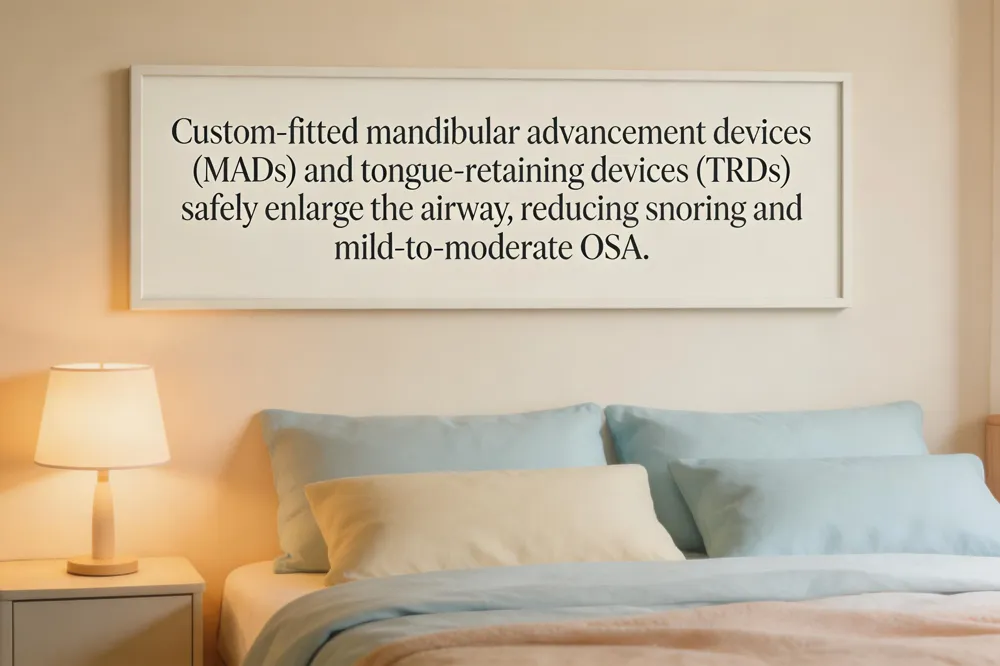 Custom mandibular advancement devices
A custom‑fitted mandibular advancement device (MAD) gently pushes the lower jaw and tongue forward, enlarging the airway and reducing tissue vibration. Studies show up to 70 % success for mild‑to‑moderate OSA, and dentists such as Dr. Tigani at Tigani Family Dentistry in Wilmington, DE favor these over over‑the‑counter models for comfort and effectiveness.
Tongue‑retaining devices
When jaw advancement isn’t tolerated, a tongue‑retaining device (TRD) uses suction to hold the tongue forward, keeping the airway clear. Though less comfortable for long‑term use, TRDs are a viable alternative for specific patients.
Fit and comfort
Precision fit is critical; in‑house digital labs fabricate appliances that match the patient’s bite, minimizing soreness and tooth movement. Regular follow‑up adjustments ensure optimal comfort and sustained airway patency.
Mechanism of airway opening
Both MADs and TRDs increase the anteroposterior airway dimension, preventing soft‑palate collapse and tongue obstruction during sleep. This non‑invasive approach restores normal airflow, reduces snoring, and improves daytime alertness.
Best sleep apnea oral appliance
The most effective is a custom‑made MAD (e.g., CareFusion ApneaRx, SnoreRx Plus, ProSomnus EVO, SomnoDent). They deliver the highest success rates when properly fitted.
What is the dental thing for snoring?
A custom‑fitted oral appliance (MAD) that repositions the jaw and tongue, fabricated on‑site for precise comfort.
Oral appliances for sleep apnea
Custom mouthpieces that advance the jaw or stabilize the tongue, offering a quiet, portable alternative to CPAP for mild‑to‑moderate OSA.
Dental appliance for snoring
A mandibular advancement device or tongue‑retaining device, professionally fitted to keep the airway open.
FDA‑approved oral appliance for sleep apnea
Devices such as Hushd Pro Z‑Link and Vivos CARE have FDA clearance for mild‑to‑moderate OSA.
Can a dentist fix snoring?
Yes—by diagnosing oral contributors and fitting a custom appliance, dentists can markedly reduce or eliminate snoring.
Do anti‑snoring mouthpieces work for sleep apnea?
They are effective for many with mild‑to‑moderate OSA, though success varies; proper fitting is essential.
Sleep apnea oral appliance dentist near me
Tigani Family Dentistry in Wilmington, DE offers custom MADs with same‑day in‑house fabrication.
Dental appliance for snoring near me
Tigani Family Dentistry in Wilmington, DE provides personalized oral‑appliance therapy, accepting most PPO insurances.
Insurance, Costs, and Getting Your Appliance Covered
 When you pursue oral appliance therapy for obstructive sleep apnea, understanding insurance, cost, and coverage details is crucial.
Medical vs. dental insurance coverage – Most medical insurers treat a custom mandibular advancement device as durable medical equipment, not a dental benefit. To qualify, a sleep study, a physician’s prescription, and documentation of medical necessity are required. Many plans also request pre‑authorization and may ask that CPAP be tried first for moderate‑to‑severe cases.
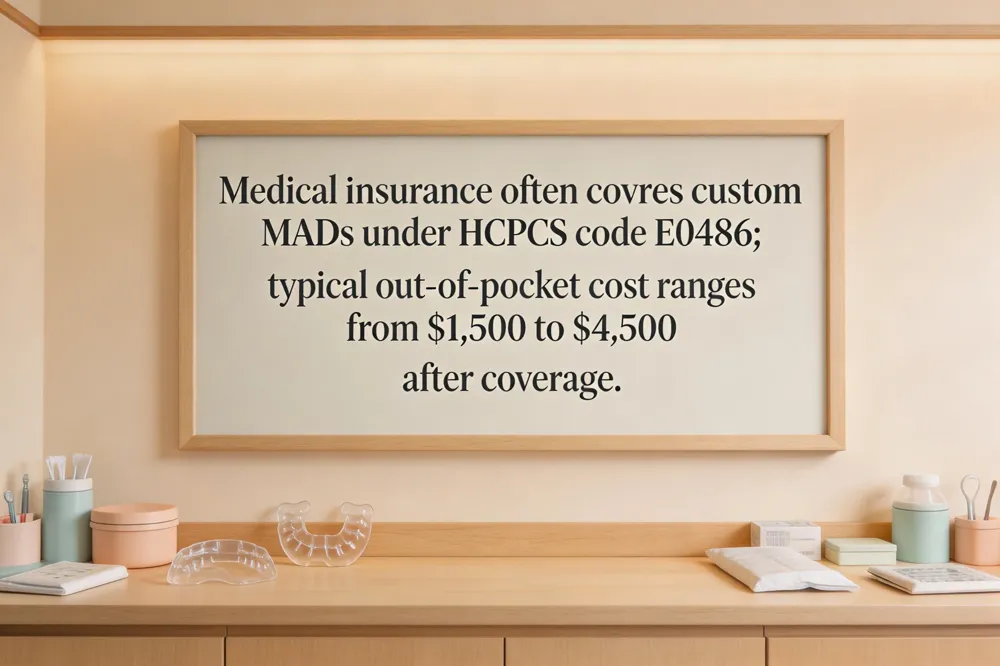
HCPCS code E0486 – Claims for the appliance are submitted using the HCPCS code E0486. This code enables coverage through your medical benefits even when the device is fitted by a dentist. Tigani Family Dentistry assists patients with the paperwork and insurance coordination.
Typical price range – A fully customized oral appliance, including fabrication, fitting, and follow‑up adjustments, generally costs between $1,500 and $4,500, with most offices averaging $2,000–$2,500. Insurance (medical or PPO dental) often covers part or all of the expense when the device is deemed medically necessary, reducing out‑of‑pocket costs.
Dental device for sleep apnea cost – The $1,500‑$4,500 range reflects material choices (acrylic, metal, thermoplastic) and professional fees. Additional check‑ups may be needed to maintain optimal therapy.
Sleep apnea appliance dentist – A specialist dentist designs and fits the custom mandibular advancement device, takes precise impressions, and schedules follow‑ups to monitor effectiveness. Compared with CPAP, the appliance is quiet, portable, and easier to use, making it a popular option for mild to moderate OSA. Tigani Family Dentistry offers this personalized, family‑focused service.
Effectiveness, Pros, Cons, and Comparison with CPAP
 Custom‑fitted mandibular advancement devices (MADs) achieve successful treatment in roughly 60 %–80 % of patients with mild‑to‑moderate obstructive sleep apnea (OSA), typically defined as a ≥50 % drop in the apnea‑hypopnea index (AHI) and an AHI < 10 events/hour. Their higher adherence—often 70 %–80 % of nights—helps offset the slightly lower efficacy compared with CPAP, which remains the gold‑standard for moderate‑to‑severe OSA.
Pros of oral appliances include comfort, low profile, portability, and the ability to sleep in any position without tubing. They avoid the claustrophobia many experience with CPAP masks and are generally less expensive. Cons involve modest effectiveness for severe OSA, the need for regular dental follow‑ups, and possible side effects such as jaw discomfort, dry mouth, or increased salivation during the adjustment period.
Compared with CPAP, oral appliances are less intrusive and more travel‑friendly, but CPAP provides the greatest reduction in AHI and is essential for severe cases. For many families in Wilmington, a dentist‑prescribed oral appliance offers a viable first‑line option when CPAP tolerance is an issue, provided a sleep specialist confirms the apnea severity.
Local Resources, Free Care, and Choosing a Wilmington Dentist
 Free dental clinics in Delaware: The Dental Health Center at Delaware Technical Community College offers reduced‑rate care and free emergency visits. The state‑run Healthy Smiles “Smile Check” program provides free screenings, fluoride varnish, education and supplies at community sites. Medicaid and Delaware Healthy Children Program members receive free cleanings, fillings and extractions. Call (302) 571‑5364 or (302) 318‑8850 for appointments.
Dentist in Delaware: Tigani Family Dentistry in Wilmington is a family‑owned practice offering preventive, cosmetic, restorative, orthodontic and sleep‑medicine services, including custom oral appliances for snoring. An in‑house lab enables same‑day crowns, veneers and appliances. Most PPOs are accepted and financing options keep care affordable and family‑focused.
Wilmington family dentistry: Tigani exemplifies local family‑focused options with routine cleanings, sealants, fluoride treatments and mandibular advancement devices for snoring relief, all delivered in a warm, flexible‑payment environment.
Is snoring 100 % curable? Rarely. Simple causes like nasal congestion, alcohol or back‑sleeping often improve with lifestyle changes. Persistent snoring may need nasal strips, oral appliances, CPAP or medical procedures; many achieve a snore‑free night, but ongoing management often remains necessary. Consult a qualified dentist to determine the best personalized plan.
Your Path to a Healthier Smile and Quiet Night
Schedule a preventive exam to catch gum disease early, then discuss your snoring concerns with Dr. Tigani. He can assess oral risk factors and, if needed, fit a mandibular advancement device. Use your PPO or Medicare coverage and the clinic’s in‑house lab for rapid, affordable relief.