Understanding Snoring and Its Health Impact
Snoring affects roughly one‑third of U.S. adults—about 22 million people—and up to 40 % of all adults report habitual snoring. While occasional snoring may be benign, persistent loud snoring often signals obstructive sleep apnea (OSA), a condition that, if left untreated, raises blood pressure, contributes to heart disease, stroke, type 2 diabetes, and leads to daytime fatigue, irritability, and cognitive decline. Dental professionals can spot early signs of sleep‑disordered breathing during routine exams. Common clues include worn‑down teeth from chronic grinding, a scalloped tongue edge, gum recession, and jaw pain or TMJ discomfort. Identifying these oral indicators prompts a sleep study, confirming OSA severity and guiding appropriate therapy such as oral appliance treatment. Early detection and intervention can reduce snoring, improve sleep quality, lower the long‑term cardiovascular risks associated with untreated sleep apnea, and can improve overall wellbeing and relationship satisfaction for patients and their partners over time.
How Dental Devices Work to Stop Snoring
Key Points
| Device Type | Mechanism | Typical Advancement | Efficacy (snoring reduction) |
|---|---|---|---|
| Mandibular Advancement Device (MAD) | Pulls lower jaw forward, enlarges airway | 6‑10 mm (custom) | ~70 % experience meaningful reduction; 1/3 near‑complete relief |
| Tongue‑Stabilizing Device (TSD) | Suction bulb holds tongue forward | N/A | Alternative for limited dentition or TMJ concerns |
| Over‑the‑counter “boil‑and‑bite” | Generic fit, limited titration | Variable | May cause bite changes, less airway opening |
| Custom‑made (digital scan or impression) | Precise fit, titratable in 1 mm increments | 1‑mm increments | Higher comfort and effectiveness |
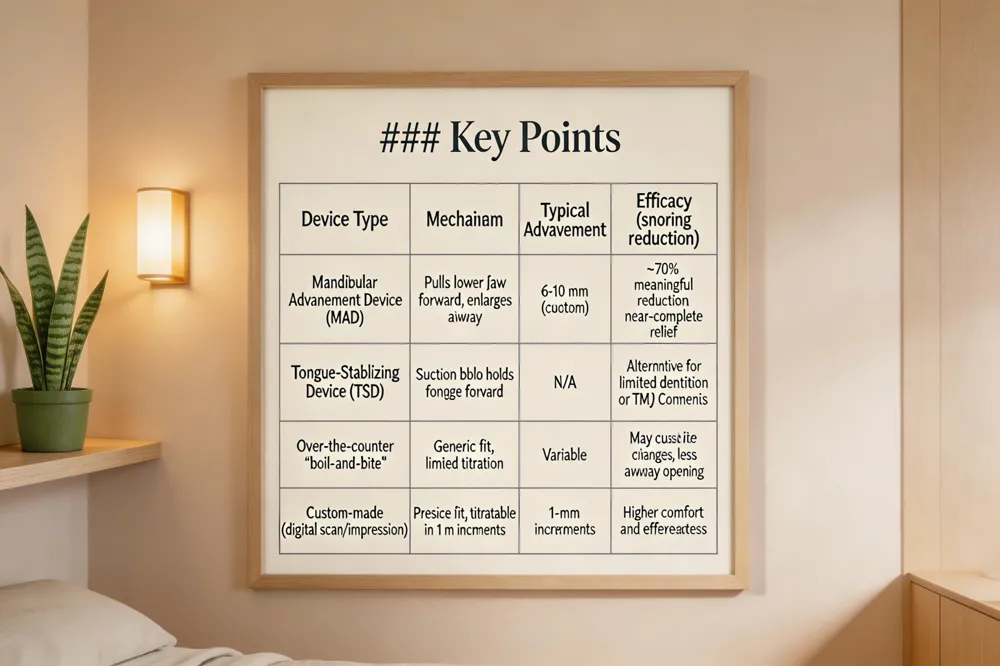 Mandibular advancement devices (MADs) keep the airway open by gently pulling the lower jaw forward, which also brings the tongue forward and enlarges the space behind the throat. This reduces the soft‑tissue vibration that creates snoring and, in mild‑to‑moderate OSA, lowers the apnea‑hypopnea index. Tongue‑stabilizing devices (TSDs) use a soft suction bulb to hold the tongue forward when a MAD cannot be used, offering an alternative for patients with limited dentition or TMJ concerns.
Custom‑made oral appliances, fabricated from a dentist’s impression or a 3‑D scan, provide a precise fit and can be titrated in 1‑mm increments for optimal comfort and effectiveness. Over‑the‑counter “boil‑and‑bite” models often lack this accuracy and may cause bite changes or inadequate airway opening.
Do dental snoring devices work? Yes—clinical studies show about 70 % of users experience a meaningful reduction in snoring and breathing events, with one‑third achieving near‑complete relief.
Do mandibular advancement devices help with snoring? Absolutely; by advancing the jaw they enlarge the airway and dampen the vibrations that cause snoring, offering a quiet, portable alternative to CPAP.
What dental device stops snoring? The Silent Nite® oral appliance, a custom‑fitted MAD, gently moves the lower jaw forward, reduces snoring intensity, and treats mild‑to‑moderate OSA in adults.
Choosing the Right Oral Appliance
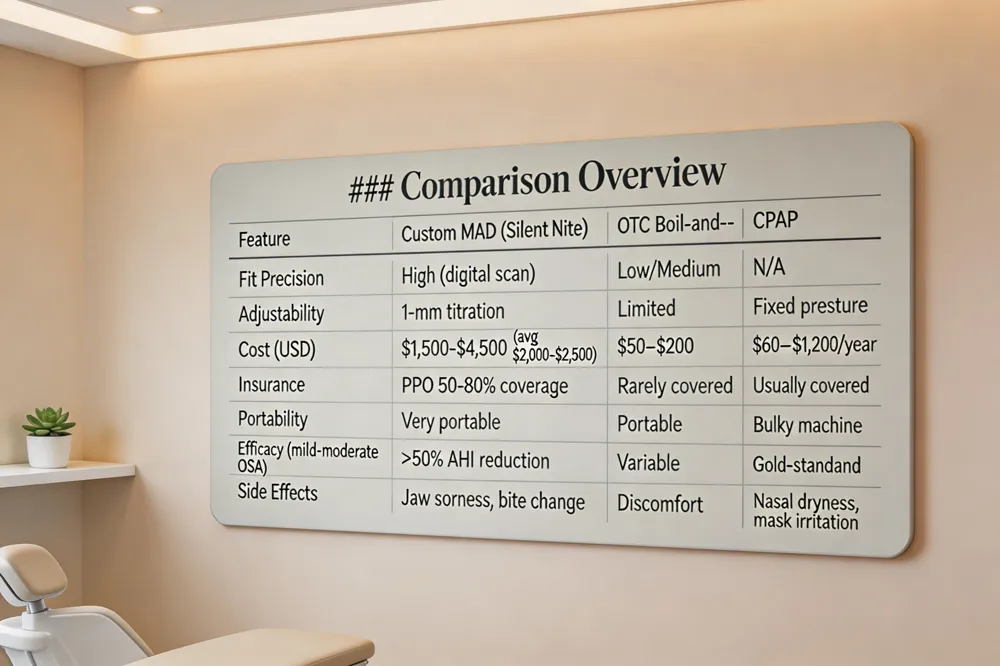
Comparison Overview
| Feature | Custom MAD (e.g., Silent Nite) | OTC Boil‑and‑B | CPAP |
|---|---|---|---|
| Fit Precision | High (digital scan) | Low/Medium | N/A |
| Adjustability | 1‑mm titration | Limited | Fixed pressure |
| Cost (USD) | $1,500‑$4,500 (often $2,000‑$2,500) | $50‑$200 | $600‑$1,200 per year |
| Insurance | PPO 50‑80 % coverage (Tigani) | Rarely covered | Usually covered |
| Portability | Very portable | Portable | Bulky machine |
| Efficacy for mild‑moderate OSA | >50 % AHI reduction | Variable | Gold‑standard for moderate‑severe |
| Typical Side Effects | Jaw soreness, bite change | Discomfort | Nasal dryness, mask irritation |
 Sleep apnea mouth guard vs CPAP
Both CPAP and a custom‑fitted mandibular advancement mouth guard treat obstructive sleep apnea, but they work differently. CPAP delivers continuous positive pressure through a mask and remains the gold‑standard for moderate‑to‑severe OSA, offering the greatest AHI reduction. A dentist‑made oral appliance gently advances the lower jaw, keeping the airway open; it is quieter, portable, and often preferred for mild‑to‑moderate OSA or travelers. Side effects can include jaw soreness, bite changes, or dry mouth if not properly fitted.
Best mandibular advancement device for sleep apnea
The most effective MAD is a custom‑fitted oral appliance designed from a digital scan of your teeth. Top‑rated options include the FDA‑cleared Silent Nite Sleep Appliance and the American Sleep Dentistry Oral Appliance. For a slightly lower cost, the CareFusion ApneaRx mouthpiece offers solid fit and adjustability. These devices advance the mandible 6–10 mm, reducing AHI by >50 % in most users.
FDA‑approved oral appliance for sleep apnea
FDA‑cleared devices include Silent Nite, SomnoDent, Herbst, TAP, and the newer Hushd Pro Z‑Link, all Class II devices with 510(k) clearance for mild‑to‑moderate OSA.
Dental device for sleep apnea cost
Custom appliances typically cost $1,500‑$4,500; most patients pay $2,000‑$2,500. PPO plans often cover 50‑80 % after deductible. Tigani Family Dentistry includes fabrication, fitting, and follow‑up in its quoted price.
Sleep apnea oral appliance dentist near me
Tigani Family Dentistry in Wilmington, DE offers in‑house, custom‑fabricated oral appliances, rapid turnaround, and most PPO insurance coverage. Schedule a complimentary consultation today.
Managing Treatment and Follow‑up
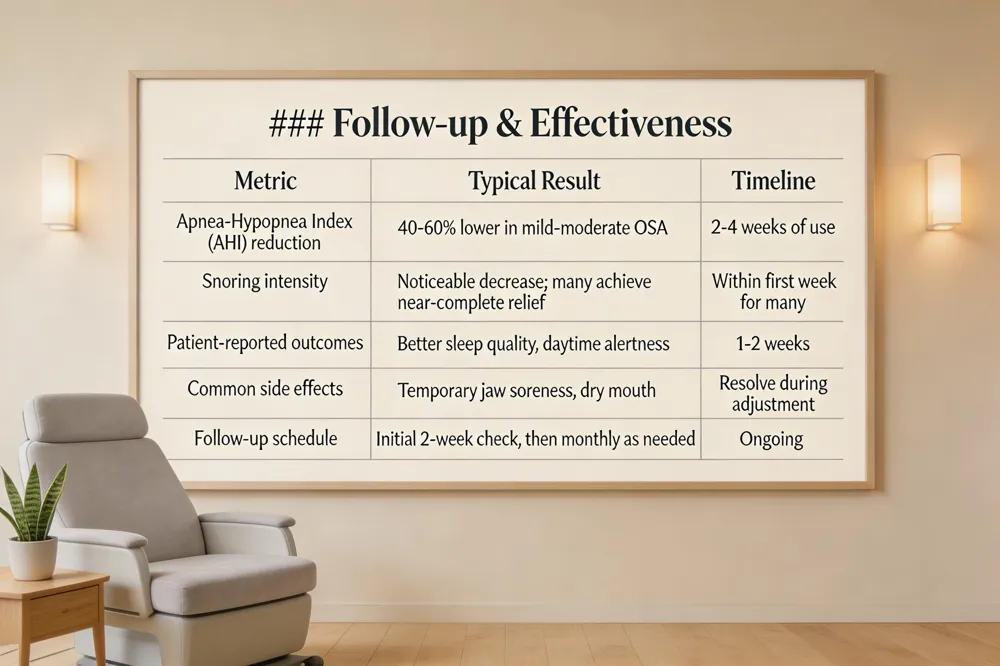
Follow‑up & Effectiveness
| Metric | Typical Result | Timeline |
|---|---|---|
| Apnea‑Hypopnea Index (AHI) reduction | 40‑60 % lower in mild‑moderate OSA | 2‑4 weeks of use |
| Snoring intensity | Noticeable decrease; many achieve near‑complete relief | Within first week for many |
| Patient‑reported outcomes | Better sleep quality, daytime alertness | 1‑2 weeks |
| Common side effects | Temporary jaw soreness, dry mouth | Resolve during adjustment |
| Follow‑up schedule | Initial 2‑week check, then monthly as needed | Ongoing |
 Sleep apnea mouth guard effectiveness
Clinical studies show that custom‑fitted mandibular advancement devices (MADs) lower the apnea‑hypopnea index by 40‑60 % in mild‑to‑moderate OSA, often eliminating snoring and improving oxygen saturation. Designed by a dentist, they pull the lower jaw and tongue forward, enlarging the airway and offering a quiet, travel‑friendly alternative to CPAP. Most users notice better sleep quality and daytime alertness within weeks, though temporary jaw discomfort or dry mouth may occur. Regular follow‑up appointments fine‑tune the device and monitor side effects for optimal outcomes.
Sleep apnea mouth guard effectiveness
Clinical studies show that custom‑fitted mandibular advancement devices (MADs) lower the apnea‑hypopnea index by 40‑60 % in mild‑to‑moderate OSA, often eliminating snoring and improving oxygen saturation. Designed by a dentist, they pull the lower jaw and tongue forward, enlarging the airway and offering a quiet, travel‑friendly alternative to CPAP. Most users notice better sleep quality and daytime alertness within weeks, though temporary jaw discomfort or dry mouth may occur. Regular follow‑up appointments fine‑tune the device and monitor side effects for optimal outcomes.
How can a dentist fix snoring? A dentist evaluates the airway, takes precise impressions or a 3‑D scan, and fabricates a custom oral appliance that gently advances the lower jaw. Follow‑up visits allow adjustments to ensure comfort and effectiveness, while the dentist monitors for irritation, bite changes, or TMJ issues. Consistent nightly wear keeps soft‑tissue vibration at bay, reducing snoring dramatically.
Pros and cons of oral appliance for sleep apnea Pros: portable, mask‑free, quiet, easy to clean, and adjustable for personalized fit. Cons: possible jaw soreness, tooth movement, gum irritation, and lower efficacy for severe OSA compared with CPAP. Regular dental check‑ups are essential to mitigate risks.
How to use oral appliance for sleep apnea Fit the custom device as instructed, place the upper plate first, then the lower plate, advancing the jaw until it snaps into place. Wear it all night, remove the lower piece first upon waking, clean daily with a soft toothbrush and non‑abrasive soap, and store in its case. Schedule follow‑up appointments for adjustments and progress monitoring.
Sleep apnea mouth guard vs CPAP CPAP provides the greatest reduction in apnea events for moderate‑to‑severe OSA but can be noisy and uncomfortable. Custom oral appliances are quieter, portable, and better tolerated for mild‑to‑moderate OSA, though they may cause jaw soreness or bite changes if not fitted properly. Choice depends on apnea severity, lifestyle, and adherence; a joint decision with your dentist and sleep physician ensures the best fit.
Lifestyle, Health Factors, and Patient Experience
Lifestyle Factors Affecting Snoring
| Factor | Impact on Airway | Recommendation |
|---|---|---|
| High‑fat dairy & fried foods | Increases inflammation & weight → airway narrowing | Limit intake, especially evenings |
| Alcohol & late‑day caffeine | Muscle relaxation & airway collapse | Avoid 4‑6 h before bedtime |
| Spicy meals | May trigger reflux, swelling | Reduce before sleep |
| Thyroid imbalance | Tissue swelling (hypothyroidism) → louder snoring | Manage thyroid health with provider |
| CPAP adherence issues | Discomfort, mask pressure, noise | Consider oral appliance if mild‑moderate OSA |
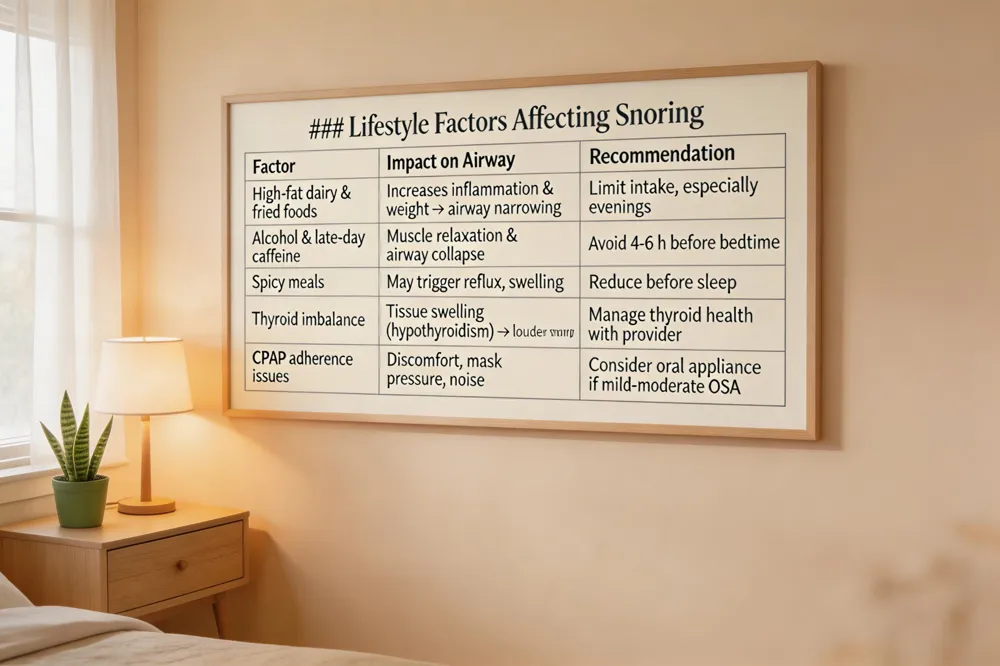 Diet and snoring/severity – Avoid high‑fat dairy (whole milk, cream, butter, rich cheeses), refined carbs and sugary treats, fried or fatty foods, processed meats high in sodium, alcohol, late‑day caffeine, and spicy meals before bed. These foods promote weight gain, inflammation, reflux and airway swelling, all of which can worsen obstructive sleep apnea and increase snoring intensity.
Thyroid influence – Hypothyroidism can cause neck and upper‑airway tissues to swell, narrowing the airway and leading to louder snoring and breathing pauses. Hyperthyroidism is less directly linked, but any thyroid imbalance that affects muscle tone or tissue inflammation may aggravate airway resistance. Discuss new snoring or related symptoms with your provider if thyroid issues are present.
Reasons patients abandon CPAP – Common complaints include nasal dryness, mask pressure points, skin irritation, feelings of claustrophobia, noisy machines, and lack of immediate symptom relief. Cost, insurance gaps and the hassle of equipment maintenance also lower adherence.
Do dental snoring devices work? – Yes. Custom‑fabricated oral appliances—mandibular advancement or tongue‑stabilizing devices—reposition the jaw or tongue to keep the airway open. Clinical data show about 70 % of users achieve a meaningful reduction in snoring and mild‑to‑moderate OSA, with one‑third experiencing near‑complete relief. Proper fitting, titration and regular follow‑up, such as offered at Tigani Family Dentistry, are essential for success.
Getting Started at Tigani Family Dentistry
Workflow Steps
| Step | Action | Outcome |
|---|---|---|
| 1 | Diagnostic sleep study (home or lab) | Confirm OSA or primary snoring |
| 2 | Digital scan / impression & appliance design | Precise custom device plan |
| 3 | In‑house lab fabrication (often same day) | Rapid device production |
| 4 | Fitting appointment & titration | Optimized jaw advancement |
| 5 | 2‑4‑week adjustment period + follow‑up | Monitor comfort, side‑effects, effectiveness |
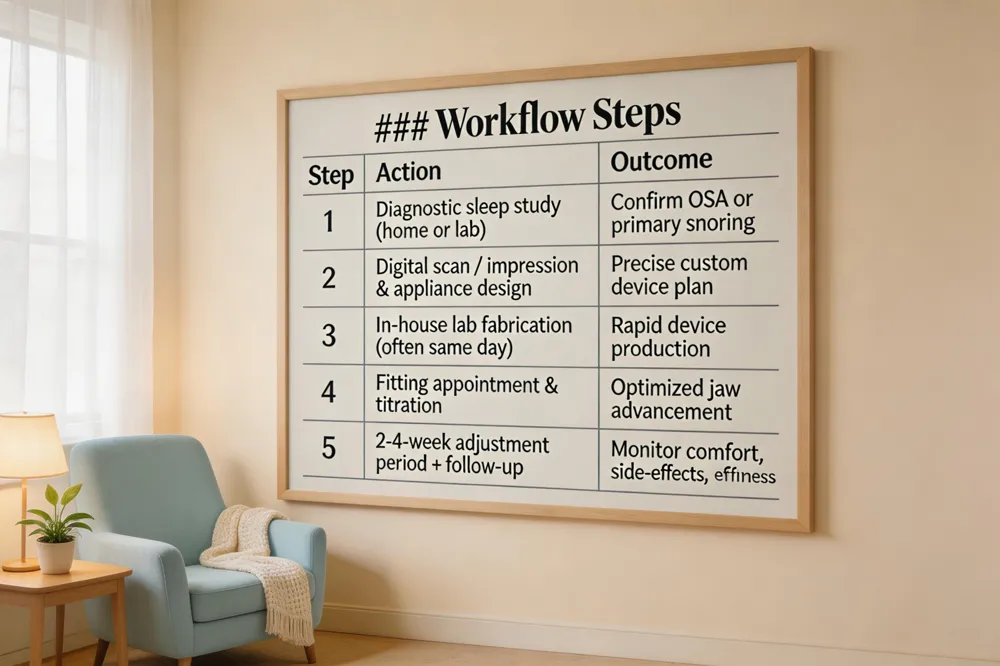 Tigani Family Dentistry’s in‑house laboratory lets us scan or take impressions, fabricate a custom mandibular advancement device (MAD) in a single visit, and make rapid adjustments. This on‑site workflow eliminates delays and ensures a precise fit that maximizes comfort and airway opening.
Step‑by‑step workflow
- Diagnostic sleep study (home or lab) confirms OSA or primary snoring.
- Dentist reviews results, takes a digital scan or impression, and designs a custom oral appliance.
- In‑house lab fabricates the device, often the same day.
- Fitting appointment fine‑tunes jaw advancement; patients begin a 2‑4‑week adjustment period.
- Follow‑up visits monitor fit, side‑effects, and effectiveness, with repeat sleep testing if needed.
Patient support & insurance Tigani accepts most PPO plans and can coordinate medical benefits for sleep‑apnea therapy, reducing out‑of‑pocket costs. Our team provides oral hygiene instructions, portable cleaning kits, and 24‑hour support for any discomfort.
FAQ highlights
- A dentist‑made snore guard is a custom‑fitted MAD that advances the lower jaw and tongue, offering superior comfort and effectiveness over OTC “boil‑and‑bite” models.
- Tigani’s Wilmington location provides these devices locally, eliminating the need to search “near me.”
- The ApneaRx mouthpiece, a BPA‑free, adjustable MAD, is available through Tigani after a proper diagnosis.
- Custom oral appliances must be prescribed by a qualified dentist or sleep specialist; they are not sold over the counter.
- Patients consistently report reduced snoring, better sleep quality, and high compliance, with mild, temporary side‑effects that resolve during the adjustment period.
Take the First Step Toward Quieter Nights
Start by scheduling a sleep‑apnea evaluation, either in‑lab or with a reliable take‑home sleep test offered at Tigani Family Dentistry. A confirmed diagnosis lets the dentist determine if an oral appliance is appropriate and sets the stage for personalized treatment. Custom‑made mandibular advancement devices are fabricated from a digital scan or impression of your teeth, ensuring a precise fit that outperforms over‑the‑counter “boil‑and‑bite” models. These devices gently advance the lower jaw, enlarging the airway, reducing snoring, and improving daytime alertness while avoiding the bulk and noise of CPAP machines. Tigani’s family‑focused practice combines in‑house laboratory fabrication for rapid turnaround, regular follow‑up appointments to monitor bite and comfort, and a welcoming environment that makes each visit feel like a visit to a trusted family dentist.