Understanding the Snoring Problem
Sleep apnea and snoring affect a large portion of Americans. About 22 million adults—roughly one‑third of the U.S. population—live with obstructive sleep apnea (OSA), and up to 40 % of adults experience habitual snoring. Untreated OSA is far from harmless; it raises blood pressure, contributes to heart disease, stroke, type 2 diabetes, and can cause daytime fatigue, irritability, and cognitive decline. The airway collapse that defines OSA also often leads to bruxism, which further damages teeth and the temporomandibular joint. Dentists are uniquely positioned to spot early warning signs during routine exams. Worn‑down teeth, jaw pain, gum recession, and a scalloped tongue can all hint at sleep‑disordered breathing. Because 36 % of Americans report dental anxiety, sedation dentistry—using nitrous oxide or IV sedation—makes impressions, X‑rays, and appliance fittings comfortable, allowing accurate diagnosis and timely referral to sleep specialists. Early dental intervention can thus prevent serious systemic complications for overall health and well‑being in families.
Why Traditional Remedies Often Fall Short
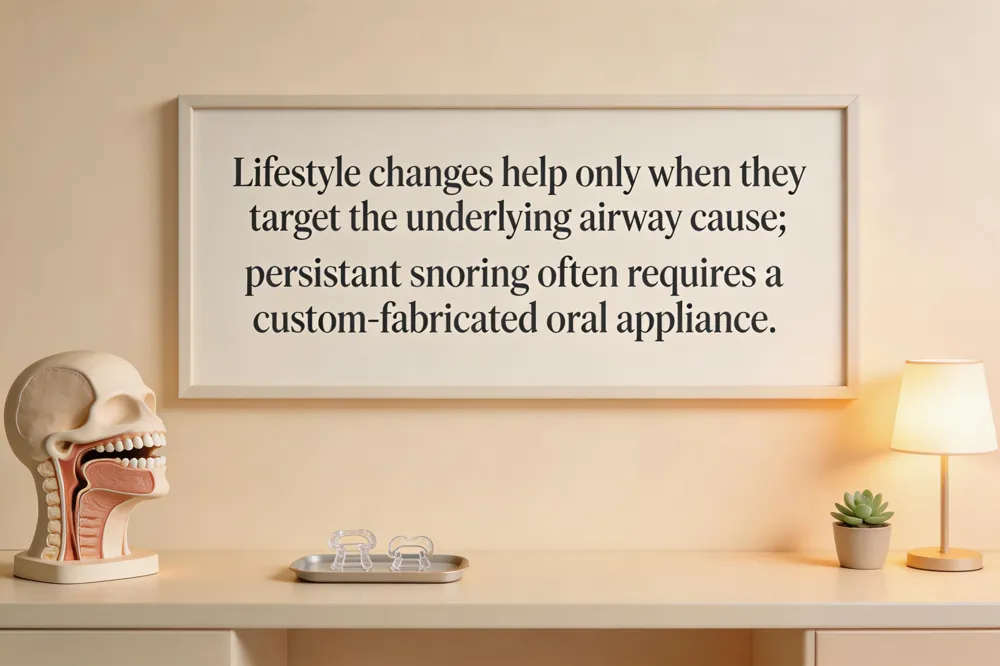 Over‑the‑counter aids and lifestyle tweaks can be helpful, but they only work when they target the real cause of airway narrowing. Simple changes—losing excess weight, avoiding alcohol or sedatives before bed, treating nasal congestion, and adopting a side‑sleeping position—often reduce snoring noticeably. Positional pillows and nasal dilators may keep the airway more open for people whose snoring is triggered by back‑sleeping or nasal blockage, yet their benefit is limited and they do not address structural collapses of the soft palate or tongue.
When self‑managed options fail, a dental solution becomes necessary. Custom‑fit oral appliances, such as mandibular advancement devices offered by Tigani Family Dentistry, gently move the lower jaw forward, preventing the tongue and soft palate from collapsing and reducing snoring intensity by up to 80% in many patients. These devices are fabricated in‑house (https://www.tiganidentistry.com/), adjusted for comfort, and monitored with follow‑up visits, providing a more reliable and personalized treatment than generic remedies.
Do Any Snoring Remedies Actually Work?
Yes—lifestyle changes, nasal dilators, and positional pillows can be effective when they address the underlying airway issue. However, for persistent snoring, a dentist‑designed oral appliance offers the most consistent results.
What Sleeping Position Will Stop Snoring?
Side sleeping, possibly with a low‑profile pillow and a slight head elevation, is the most effective position for keeping the airway open and reducing snoring.
The Science Behind Dental Oral Appliances
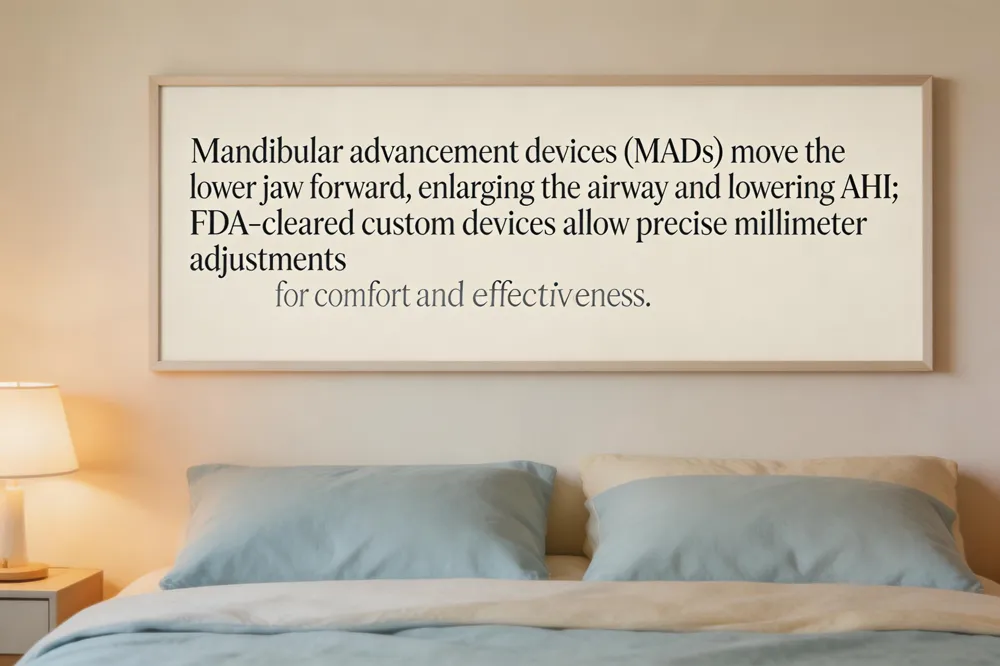 Mandibular advancement devices (MADs) treat obstructive sleep apnea by gently pulling the lower jaw forward, which also moves the tongue and enlarges the airway at the back of the throat. This forward positioning prevents soft‑tissue collapse during sleep, reducing apnea‑hypopnea events and snoring. The FDA classifies MADs as Class II medical devices and grants 510(k) clearance when safety and effectiveness are demonstrated; examples of cleared devices include SomnoDent, Drake® MAD, AirFit™ and the recently approved Hushd Pro Z‑Link, all custom‑fabricated to each patient’s anatomy. Top‑rated custom options for OSA are the SomnoDent, TAP (Thornton Adjustable Positioner), iSleep, ProSomnus EVO, and Panthera Classic, which allow precise millimeter adjustments, are built from durable acrylic or thermoplastic materials, and offer superior comfort compared with over‑the‑counter trays.
Best sleep apnea oral appliance: A custom‑fabricated MAD, such as the SomnoDent or ProSomnus EVO, provides the greatest reduction in AHI while maintaining comfort.
FDA‑approved oral appliance for sleep apnea: Mandibular advancement devices like SomnoDent, Drake® MAD, and the Hushd Pro Z‑Link have received FDA 510(k) clearance.
Mandibular advancement device: A removable, in‑house fabricated oral appliance that advances the mandible, improves airway patency, and offers a non‑invasive alternative to CPAP for mild‑to‑moderate OSA.
Cost, Insurance, and Access to Sleep Dentistry
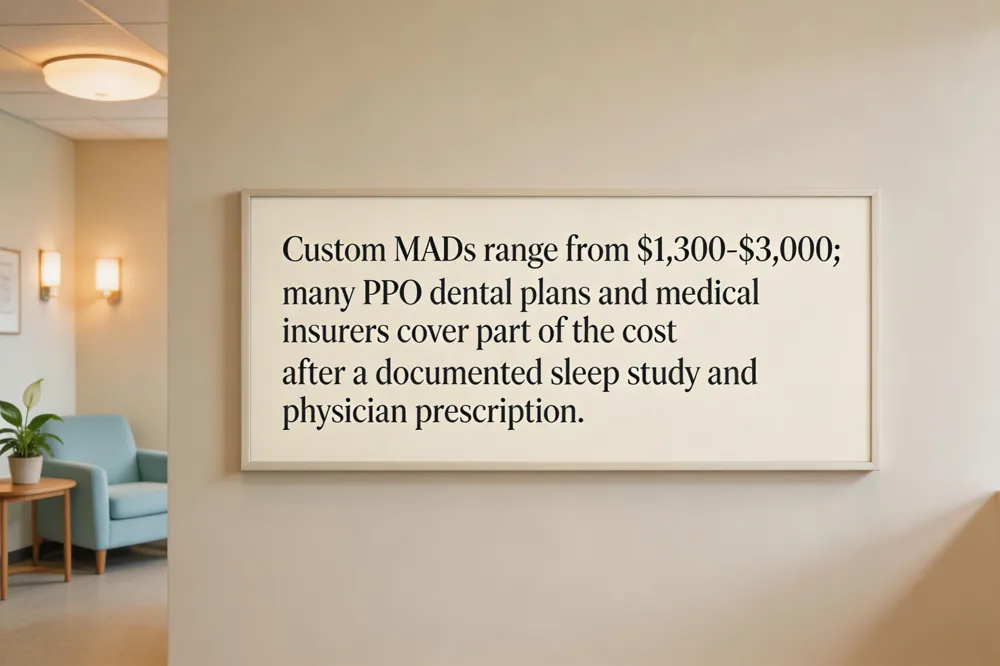 Tigani Family Dentistry in Wilmington, DE offers custom‑made oral appliances for obstructive sleep apnea (OSA) at a competitive price. A typical device, including the initial impression, in‑house fabrication, and at least one adjustment visit, ranges from $1,300‑$3,000 (often $1,500‑$4,500 in the broader market). Most PPO dental plans and many medical policies cover part or all of this cost when a sleep study confirms the diagnosis.
Dental device for sleep apnea cost – The price includes a personalized mandibular advancement device (MAD) that safely repositions the lower jaw, reducing airway obstruction and snoring.
Is a sleep clinic covered by insurance? – Yes. Medicare, Medicaid, and private PPOs typically reimburse in‑lab polysomnography and at‑home sleep tests when deemed medically necessary, though prior authorization and documentation are required.
Will insurance cover oral appliances for sleep apnea? – Many medical insurers treat custom MADs as durable medical equipment, covering a portion of the expense after a documented OSA diagnosis and a physician’s prescription.
Sleep apnea oral appliance dentist near me – Tigani Family Dentistry provides family‑focused, in‑house sleep dentistry, works with your insurer to maximize benefits, and offers rapid turnaround on custom devices. Contact the office for a comprehensive evaluation and to start non‑invasive OSA treatment.
Success Rates and What to Expect
 Clinical outcomes and reduction in AHI
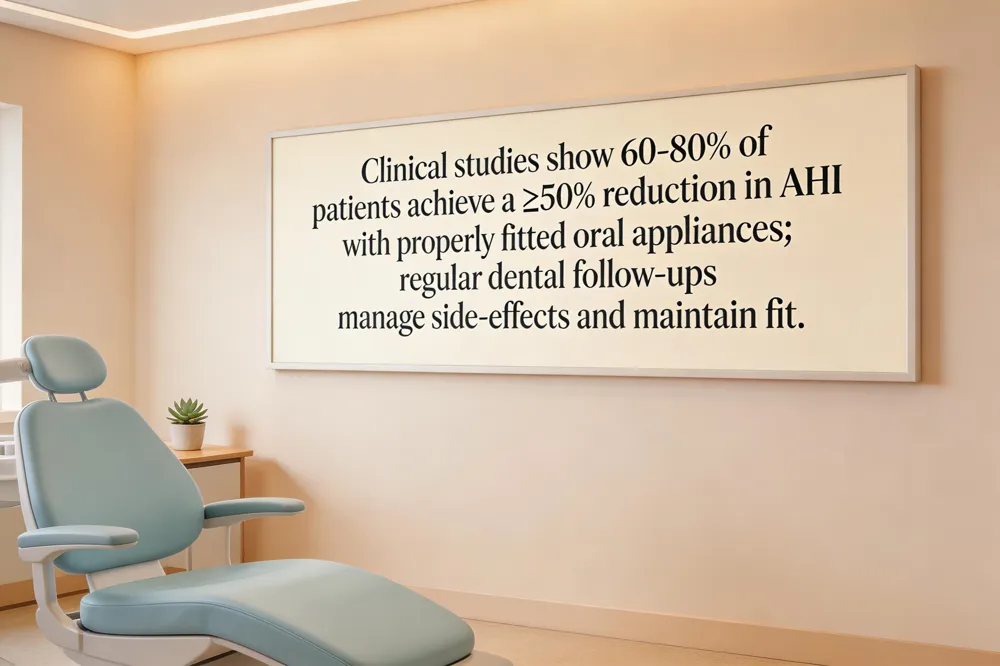
Multiple studies show that custom‑made mandibular advancement devices lower the apnea‑hypopnea index by at least 50 % in 60‑80 % of patients with mild‑to‑moderate OSA. In one two‑year trial, the success rate (clinically meaningful AHI drop) was 56 % for oral appliances versus 60 % for CPAP in non‑severe cases, confirming oral appliances as a viable alternative for many.
Clinical outcomes and reduction in AHI
Multiple studies show that custom‑made mandibular advancement devices lower the apnea‑hypopnea index by at least 50 % in 60‑80 % of patients with mild‑to‑moderate OSA. In one two‑year trial, the success rate (clinically meaningful AHI drop) was 56 % for oral appliances versus 60 % for CPAP in non‑severe cases, confirming oral appliances as a viable alternative for many.
Advantages and disadvantages of oral appliance therapy Pros: non‑invasive, portable, silent, no mask, easy to travel, often covered by PPO insurance for mild‑to‑moderate OSA. Cons: possible jaw soreness, temporary changes in bite, excess salivation or dry mouth, and reduced effectiveness for severe OSA. Regular dental follow‑up is essential to manage side‑effects and maintain fit.
Step‑by‑step usage and follow‑up
- Schedule a consultation at Tigani Family Dentistry for impressions and evaluation.
- Receive a custom‑fitted mandibular advancement device fabricated in the in‑house lab.
- Each night, place the upper plate, then the lower plate, advancing the jaw gently until the device locks.
- Clean daily with a soft brush, store in a case, and avoid hot water.
- Return for adjustments every 1‑2 weeks and repeat a sleep study to confirm effectiveness.
Pros and cons of oral appliance for sleep apnea Oral appliances are comfortable, portable, and mask‑free, making them attractive for claustrophobic or traveling patients. They are custom‑fitted, often insurance‑covered, but can cause jaw discomfort, tooth movement, or bite changes, and may be less effective for severe OSA.
Dental appliance sleep apnea success rate Clinical data indicate a ≥50 % AHI reduction in roughly 60‑80 % of mild‑to‑moderate OSA patients when properly fitted and monitored.
How to use oral appliance for sleep apnea
- Visit Tigani Family Dentistry for impressions.
- Receive a custom device from the in‑house lab.
- Insert upper then lower plate nightly, advancing the jaw.
- Clean and store properly.
- Attend follow‑up visits every 1‑2 weeks for adjustments and repeat a sleep study.
Personalized Care at Tigani Family Dentistry
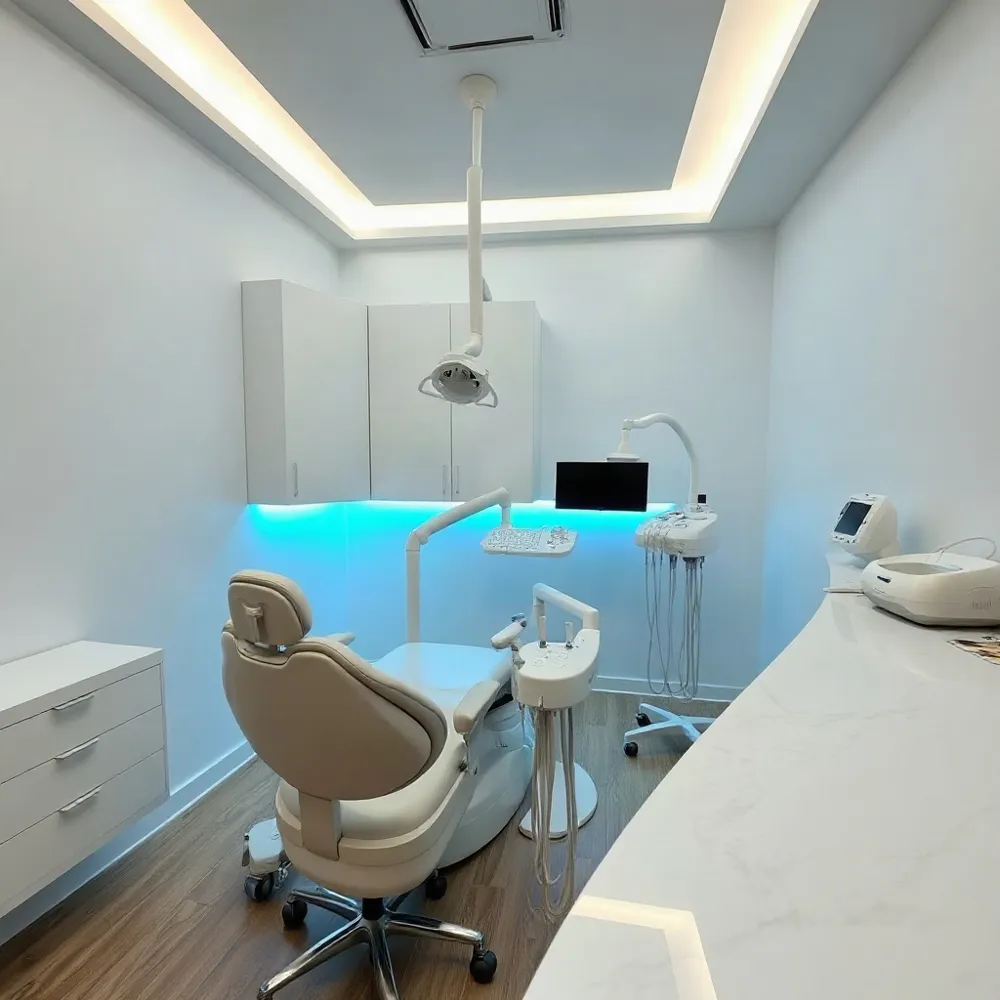
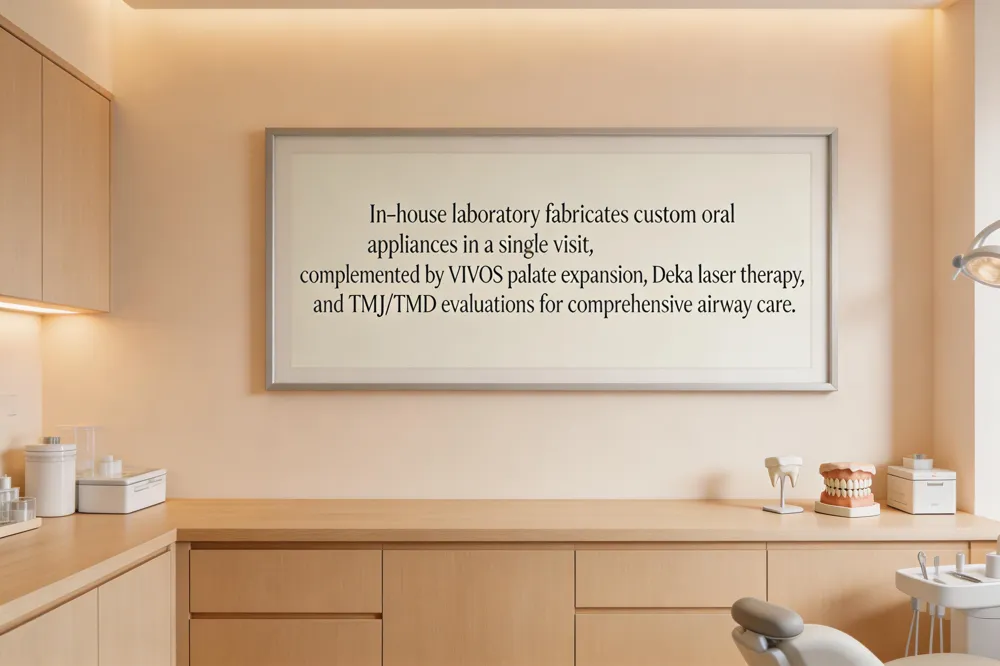 Tigani Family Dentistry in Wilmington, DE, differentiates its sleep‑medicine program through an in‑house laboratory that fabricates custom oral appliances—such as mandibular advancement devices (MADs)—in as little as one visit, ensuring a precise fit and rapid relief for snoring and mild‑to‑moderate obstructive sleep apnea (OSA). The practice also offers complementary services that enhance airway patency: VIVOS appliances that gently expand the palate, Deka Laser Therapy that tightens soft‑palate tissue, and comprehensive TMJ/TMD evaluations that address jaw tension often linked to snoring. All treatments are delivered in the family‑focused, comfortable environment that emphasizes patient education, comfort, and coordinated care with sleep physicians.
What does Joe Rogan use to help sleep? Joe Rogan reportedly uses a custom‑fitted mandibular advancement devices (MADs) that repositions his jaw forward, keeping the airway open and reducing snoring and apnea events.
Take the First Step Toward Quiet, Restful Nights
Dental sleep medicine offers a range of proven, non‑invasive solutions for snoring and obstructive sleep apnea. Custom‑made mandibular advancement devices (MADs) gently pull the lower jaw forward, opening the airway and often cutting the apnea‑hypopnea index by more than 50% while reducing snoring intensity up to 80%. A take‑home sleep study performed in the office captures breathing patterns and oxygen levels, allowing the dentist to diagnose OSA accurately and tailor treatment. At Tigani Family Dentistry, every step—from digital impressions to the fabrication of a personalized oral appliance—occurs in an in‑house laboratory, ensuring rapid turnaround and precise fit. The practice’s family‑focused, patient‑centered environment means you receive education, compassionate care, and coordinated follow‑up appointments, all under one roof. Schedule your sleep‑apnea evaluation today and experience the health benefits of quieter nights, better sleep, and lowered cardiovascular risk.