Opening the Door to Better Sleep
Obstructive sleep apnea (OSA) affects millions of Americans, causing repeated airway collapse, loud snoring, daytime fatigue and increased cardiovascular risk. Standard treatment with continuous positive airway pressure (CPAP) is highly effective but many patients cannot tolerate the mask, pressure settings or noise, leading to poor adherence. Oral appliance therapy offers an alternative that advances the lower jaw (or tongue) to keep the airway open, and is especially suited for mild‑to‑moderate OSA or for those who abandon CPAP. Custom‑made mandibular advancement devices are fabricated from dental impressions or 3‑D scans, ensuring a precise fit that minimizes side effects and improves comfort. Tigani Family Dentistry in Wilmington, DE embraces a family‑focused approach: a sleep study referral, in‑house digital scanning, rapid in‑lab fabrication, and regular follow‑up visits to titrate the appliance and monitor oral health. This coordinated care delivers portable, quiet treatment that fits lifestyles while reducing snoring, daytime sleepiness and health risks.
Natural Strategies and the Basics of Mandibular Advancement Devices
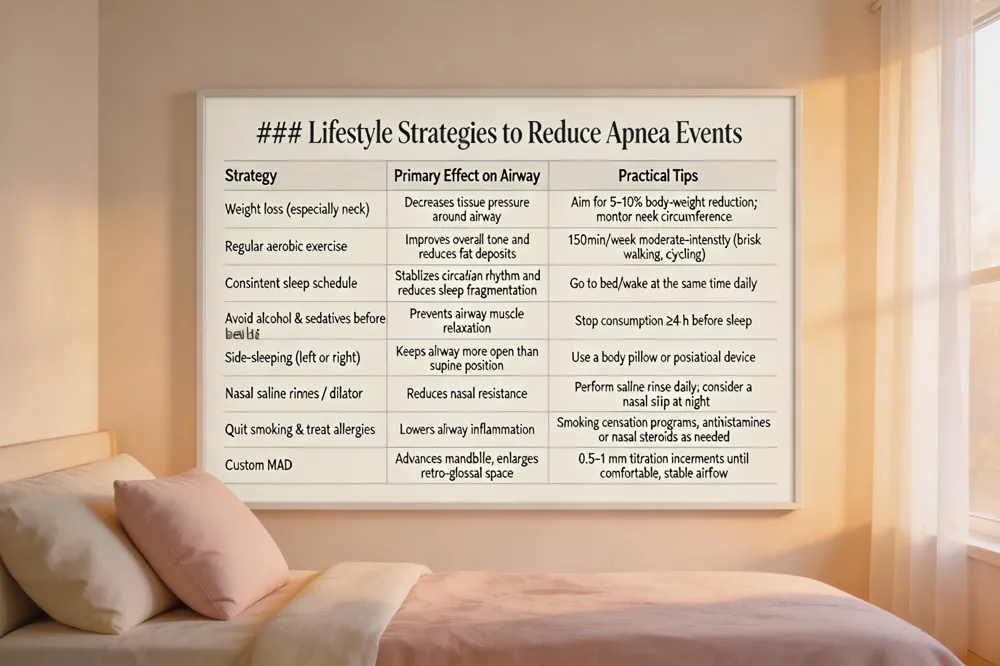
Lifestyle Strategies to Reduce Apnea Events
| Strategy | Primary Effect on Airway | Practical Tips |
|---|---|---|
| Weight loss (especially neck) | Decreases tissue pressure around airway | Aim for 5‑10 % body‑weight reduction; monitor neck circumference |
| Regular aerobic exercise | Improves overall tone and reduces fat deposits | 150 min/week moderate‑intensity (e.g., brisk walking, cycling) |
| Consistent sleep schedule | Stabilizes circadian rhythm and reduces sleep fragmentation | Go to bed/wake at the same time daily |
| Avoid alcohol & sedatives before bed | Prevents airway muscle relaxation | Stop consumption ≥4 h before sleep |
| Side‑sleeping (left or right) | Keeps airway more open than supine position | Use a body pillow or positional device |
| Nasal saline rinses / dilator | Reduces nasal resistance | Perform saline rinse daily; consider a nasal strip at night |
| Quit smoking & treat allergies | Lowers airway inflammation | Smoking cessation programs; antihistamines or nasal steroids as needed |
| Custom MAD | Advances mandible, enlarges retro‑glossal space |
 Lifestyle changes that reduce apnea events
Weight loss, especially around the neck, regular aerobic exercise, and a balanced diet lower the pressure on the upper airway. Maintaining a consistent sleep schedule, avoiding alcohol and sedatives before bedtime, and sleeping on the side keep the airway more patent. Nasal saline rinses or a dilator improve airflow, while quitting smoking and treating allergies reduce inflammation that can narrow the airway.
Lifestyle changes that reduce apnea events
Weight loss, especially around the neck, regular aerobic exercise, and a balanced diet lower the pressure on the upper airway. Maintaining a consistent sleep schedule, avoiding alcohol and sedatives before bedtime, and sleeping on the side keep the airway more patent. Nasal saline rinses or a dilator improve airflow, while quitting smoking and treating allergies reduce inflammation that can narrow the airway.
How mandibular advancement devices (MADs) work MADs are FDA‑cleared oral appliances that gently pull the lower jaw (and consequently the tongue) forward, enlarging the retro‑glossal and retro‑palatal airway space. Custom‑made devices are fabricated from dental impressions or 3‑D scans, allowing precise fit and incremental titration—usually 0.5–1 mm per adjustment—until optimal airway patency is achieved without excessive discomfort.
Differences between splints, MADs, and over‑the‑counter options A mandibular advancement splint is a basic form of MAD, while a full‑featured MAD may include adjustable hinges, vertical opening control, and compliance sensors. Over‑the‑counter “boil‑and‑bite” devices are generic, lack precise fit, and often produce more side effects (gum irritation, tooth movement). Custom‑fabricated MADs, by contrast, offer superior comfort, higher adherence (70‑80 % nightly use), and better therapeutic outcomes.
Evidence of effectiveness for mild‑to‑moderate OSA Clinical studies consistently show that custom MADs reduce the apnea‑hypopnea index (AHI) by 50‑80 % in patients with mild‑to‑moderate OSA, comparable to CPAP in many cases. Improvements include reduced snoring, daytime sleepiness, and elevated oxygen saturation.
FAQ How to cure sleep apnea naturally at home without CPAP? Start with weight loss, side sleep schedule, avoid alcohol, sleep on your side, use nasal saline or a dilator, quit smoking, manage allergies, and consider a custom oral appliance as a non‑invasive option.
Mandibular advancement devices (MADs)? They are custom, FDA‑cleared mouthpieces that reposition the jaw forward to keep the airway open, ideal for mild‑to‑moderate OSA and preferred over CPAP when mask intolerance exists.
Mandibular advancement splint? A dental appliance that gently pushes the lower jaw forward, maintaining airway patency during sleep.
Do mandibular advancement devices work? Yes—studies report a 60‑80 % reduction in AHI, markedly improving snoring and daytime alertness.
Choosing the Best Device and Understanding FDA Clearance
Comparison of Top‑Rated Adjustable MADs
| Device | Incremental Adjustment | Material / Build | FDA Clearance (Class II 510(k)) | Approx. Cost (USD) |
|---|---|---|---|---|
| ProSomnus EVO | 1 mm (dual‑arm Herbst) | Dual‑laminate acrylic + metal framework | Yes (2020) | $1,800‑$2,500 |
| Silent Nite | 1 mm (telescope‑style hinge) | Reinforced acrylic, titanium alloy | Yes (2018) | $1,600‑$2,200 |
| TAP | 1 mm (adjustable hinge) | 3‑D‑printed acrylic, optional metal reinforcement | Yes (2021) | $1,500‑$2,400 |
| SomnoDent | 0.5‑1 mm (micro‑adjustable) | High‑strength acrylic | Yes (2015) | $1,400‑$2,000 |
| AirSnore | 1 mm (simple hinge) | Standard acrylic | Yes (2017) | $1,200‑$1,800 |
All devices are FDA‑cleared Class II medical devices and are typically reimbursable as Durable Medical Equipment (DME) when prescribed.
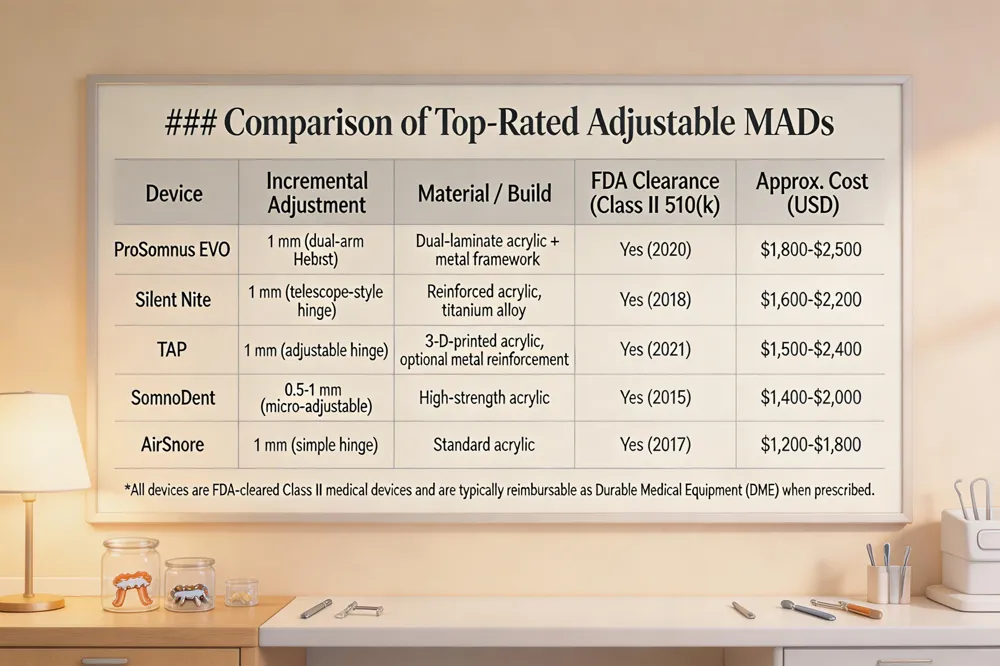 Top‑rated adjustable mandibular advancement devices (MADs) combine precise titration, durable materials, and digital workflow. Devices such as the ProSomnus EVO, Silent Nite, and TAP use a Herbst‑style dual‑arm or telescope‑style hinge that allows 1 mm incremental jaw advancement, while 3‑D‑printed or milled acrylic provides a snug, comfortable fit. Many incorporate dual‑laminate or reinforced acrylic for patients with bruxism or limited oral space, reducing the risk of fracture and improving durability.
FDA clearance (Class II 510(k) clearance) confirms that a device meets strict safety and efficacy standards. Cleared MADs have demonstrated a statistically significant reduction in the apnea‑hypopnea index (AHI) and are required to include labeling, usage instructions, and post‑sale monitoring. This regulatory approval also facilitates insurance reimbursement and assures patients that the appliance has undergone rigorous testing.
Selection should be anatomy‑driven: sufficient healthy teeth for anchorage, adequate jaw range of motion, and absence of severe TMJ pathology are prerequisites. A dentist will evaluate the patient’s bite, airway anatomy, and comfort preferences, then fabricate a custom appliance from digital impressions or scans. This personalized approach maximizes therapeutic benefit while minimizing side effects such as jaw soreness or tooth movement.
Best mandibular advancement device for sleep apnea: A custom‑made, titratable MAD—e.g., ProSomnus EVO or Silent Nite—offers precise adjustment, durable materials, and a digital workflow, making it the most effective and comfortable option.
FDA‑approved oral appliance for sleep apnea: Devices like SomnoDent, TAP, and AirSnore have received FDA 510(k) clearance, confirming they meet safety and effectiveness criteria for treating mild to moderate OSA.
Patient Experiences, Reviews, and Real‑World Efficacy
Real‑World Outcomes from Custom MAD Users
| Study / Review | Sample Size | Mean AHI Reduction | Adherence (nightly use) | Patient‑Reported Satisfaction |
|---|---|---|---|---|
| Dr. Rashmi Parmar (2022) | 48 patients (mild‑moderate OSA) | 55 %‑80 % drop (average 68 %) | 78 % ≥4 h/night | 9/10 average comfort rating |
| Dr. Chiarina Iregui (2023) | 30 patients (follow‑up 6 mo) | 62 % reduction | 72 % consistent use | 85 % would recommend |
| Consumer Survey (SleepApnea.org, 2021) | 1,200 respondents (custom MAD) | 58 % reported snoring ↓ | 70‑80 % nightly use | 82 % “significantly improved sleep” |
| OTC “boil‑and‑bite” comparison (J. Sleep Res., 2020) | 50 patients | 30 %‑45 % reduction | 45 % nightly use | 60 % reported gum irritation |
Custom‑made devices consistently outperform OTC alternatives in AHI reduction, adherence, and comfort.
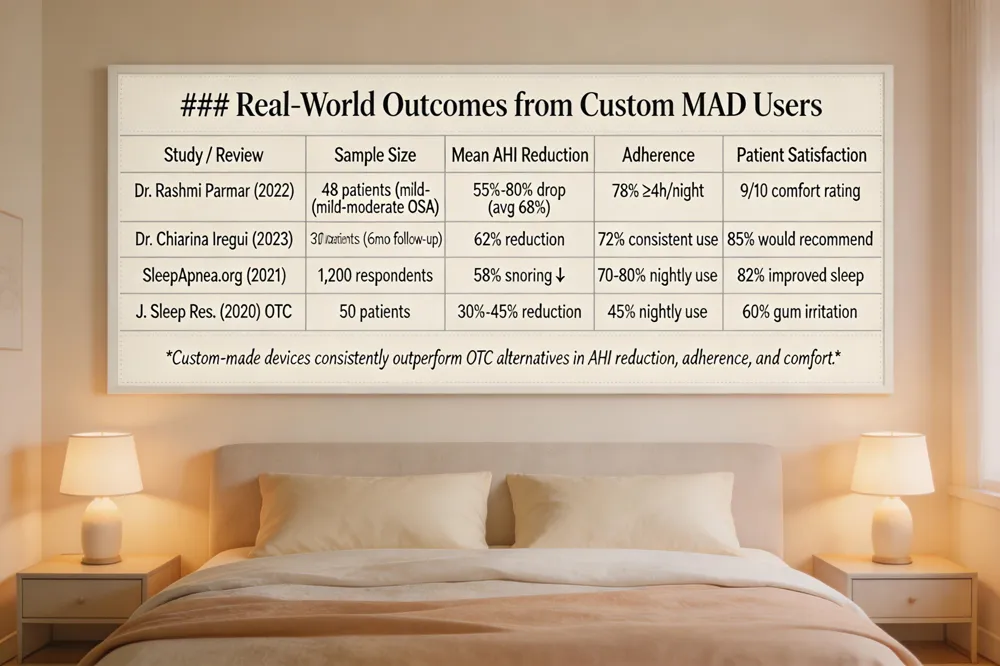 Patients who receive custom‑made mandibular advancement devices (MADs) for obstructive sleep apnea consistently report a marked reduction in snoring and a noticeable improvement in overall sleep quality. After a short adaptation period of two‑to‑four weeks, most reviewers describe the appliance as comfortable, waking refreshed and free of daytime fatigue. from clinicians such as Dr. Rashmi Parmar and Dr. Chiarina Iregui confirm that apnea‑hypopnea index (AHI) scores often drop by 50 %–80 % and oxygen saturation returns to normal ranges, allowing couples to sleep peacefully together.
Clinical outcomes reported by providers show that custom oral appliances reduce AHI significantly more than over‑the‑counter “boil‑and‑bite” devices, with studies documenting 30 %–50 % lower AHI and higher adherence rates (70 %–80 % nightly use versus 40 %–50 % for CPAP). The personalized fit achieved through dental impressions or 3‑D scans minimizes side effects such as gum irritation or jaw pain, leading to higher long‑term satisfaction.
Compared with OTC alternatives, custom devices provide precise mandibular advancement, greater comfort, and superior therapeutic effect. Recent 3‑D‑printed, digitally designed MADs allow incremental titration in 1 mm increments, further improving patient comfort and efficacy.
Sleep apnea oral appliance reviews: patients praise the quiet, portable nature of the therapy, noting reduced snoring, better sleep quality, and a willingness to recommend the treatment.
Do custom oral appliances work for sleep apnea? yes—especially for mild to moderate OSA, and emerging data suggest benefit in selected severe cases.
New device for sleep apnea: the latest generation are 3‑D‑printed, digitally designed mandibular advancement appliances that enable precise titration and enhanced comfort.
Comparing Oral Appliances to CPAP and Understanding Health Risks
Oral Appliance vs. CPAP – Key Metrics
| Metric | Oral Appliance (MAD) | CPAP |
|---|---|---|
| AHI Reduction | 50‑80 % (average 65 %) | 80‑95 % (often >90 %) |
| Nightly Compliance | 70‑80 % (≥4 h) | 40‑50 % (≥4 h) |
| Patient Comfort | High (no mask, portable) | Variable (mask pressure, noise) |
| Cardiovascular Benefit | Moderate (improved O₂ sat) | Strong (consistent airway patency) |
| Side‑Effects | Jaw soreness, tooth movement (rare) | Nasal congestion, skin irritation, aerophagia |
| Cost (initial) | $1,200‑$3,000 (custom) | $600‑$1,200 machine + consumables |
| Suitability | Mild‑to‑moderate OSA, CPAP‑intolerant | All severities, gold‑standard for severe OSA |
Untreated OSA carries serious health risks (hypertension, arrhythmias, stroke, motor‑vehicle accidents). Both therapies reduce risk, but CPAP offers the most robust cardiovascular protection.
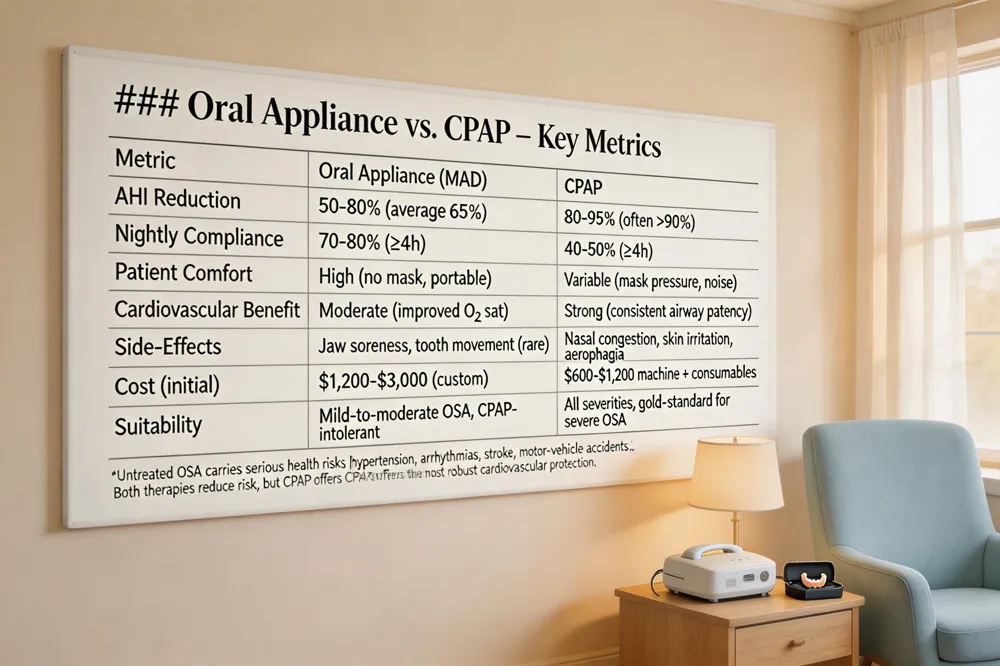 Mouth‑guard type oral appliances (custom mandibular advancement devices) are a low‑profile, portable alternative to continuous positive airway pressure (CPAP) for mild‑to‑moderate obstructive sleep apnea (OSA). They work by gently pulling the lower jaw and tongue forward, enlarging the airway and reducing snoring. Because they require no mask, electricity, or bulky equipment, patients often find them more comfortable and are more likely to use them regularly—compliance rates of 70‑80% versus 40‑50% for CPAP. However, the reduction in apnea‑hypopnea index (AHI) is typically modest (≈50‑80% drop) and may not be sufficient for severe OSA, where CPAP remains the gold‑standard, reliably eliminating airway collapse and delivering the greatest cardiovascular benefit.
Untreated sleep apnea can be fatal. Repeated oxygen desaturations stress the heart, leading to hypertension, heart disease, arrhythmias, stroke, and increased risk of motor‑vehicle accidents due to daytime sleepiness. Many patients remain unaware of these dangers until a serious event occurs.
Sleep apnea is not usually curable, but it can be effectively managed. Treatment options—CPAP, custom oral appliances, weight loss, positional therapy, or surgery—can eliminate symptoms and lower health risks. Regular follow‑up with a sleep‑medicine‑qualified dentist ensures the device remains effective and adjustments are made as needed, allowing most individuals to achieve a high quality of life.
Insurance, Cost, and Finding the Right Dentist
Insurance & Cost Overview for Custom MADs
| Item | Typical Details |
|---|---|
| Device Type | Fully custom, titratable MAD |
| Average Price | $1,500‑$3,000 (incl. impressions, fabrication, follow‑up) |
| Insurance Coverage | Often covered as Durable Medical Equipment (DME) when a physician’s letter of medical necessity and sleep‑study report are provided |
| Common Billing Codes | DME codes: E1399 (miscellaneous DME), CPT 99213‑99215 for evaluation, CPT D9620‑D9625 for appliance fabrication |
| Out‑of‑Pocket | Depends on deductible, co‑pay, and prior‑authorization; many plans reimburse 50‑80 % of the cost |
| Finding a Provider | Look for dentists with AADSM certification, in‑house digital lab, and DME enrollment (e.g., Tigani Family Dentistry, Wilmington, DE) |
| Financing Options | HSA/FSA eligible, payment plans, or third‑party medical credit (e.g., CareCredit) |
Contact the provider for a precise estimate and to verify specific insurer requirements.
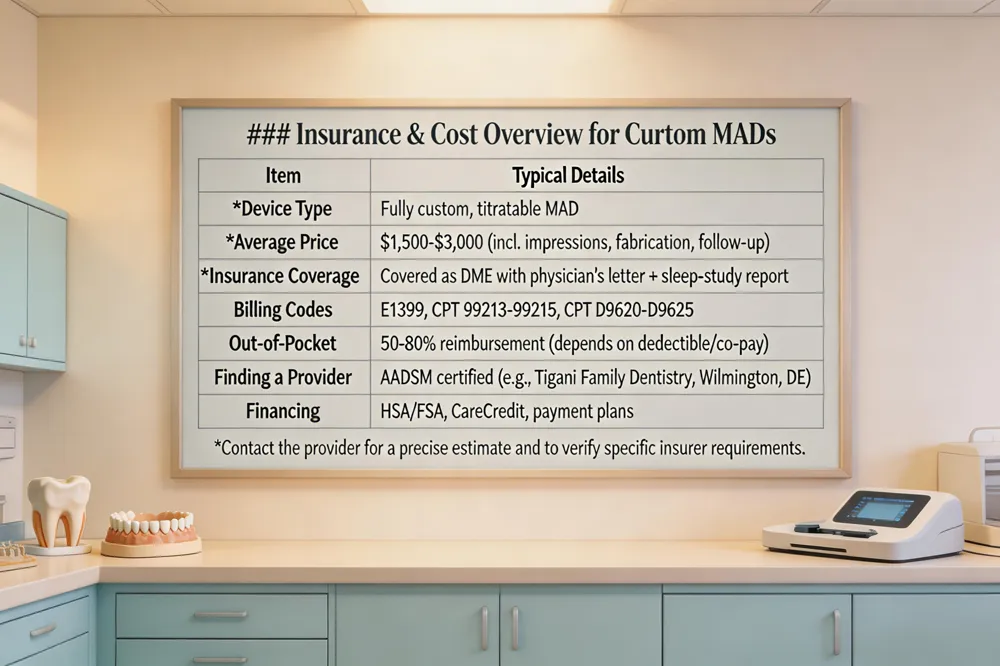 Patients with obstructive sleep apnea (OSA) often wonder whether insurance will cover a custom oral appliance. The good news is that most medical and dental plans treat FDA‑cleared mandibular advancement devices (MADs) as Durable Medical Equipment (DME). Coverage typically requires a documented OSA diagnosis (ICD‑327.23 or similar), a sleep‑study report, and a physician’s letter of medical necessity. Dentists who are enrolled DME suppliers—such as Tigani Family Dentistry in Wilmington, DE—can submit the appropriate billing codes, and many PPOs, Medicare, and private insurers reimburse a portion of the cost.
Cost varies by device complexity and materials. Fully custom appliances generally range from $1,500 to $3,000, while semi‑custom or prefabricated models may fall between $800 and $1,500. Out‑of‑pocket expenses depend on individual plan deductibles, co‑pays, and any pre‑authorization requirements. A consultation will provide a precise estimate and help you understand financing or HSA/FSA options.
To locate a qualified provider, look for a dentist with sleep‑medicine certification (AADSM) and an in‑house lab for rapid fabrication. Tigani Family Dentistry offers digital impressions, a take‑home sleep study, and same‑day adjustments, making it a convenient choice for Wilmington residents. Call (302) 571‑8740 or schedule online for a personalized evaluation.
Emerging and Adjunct Treatments Beyond the Appliance
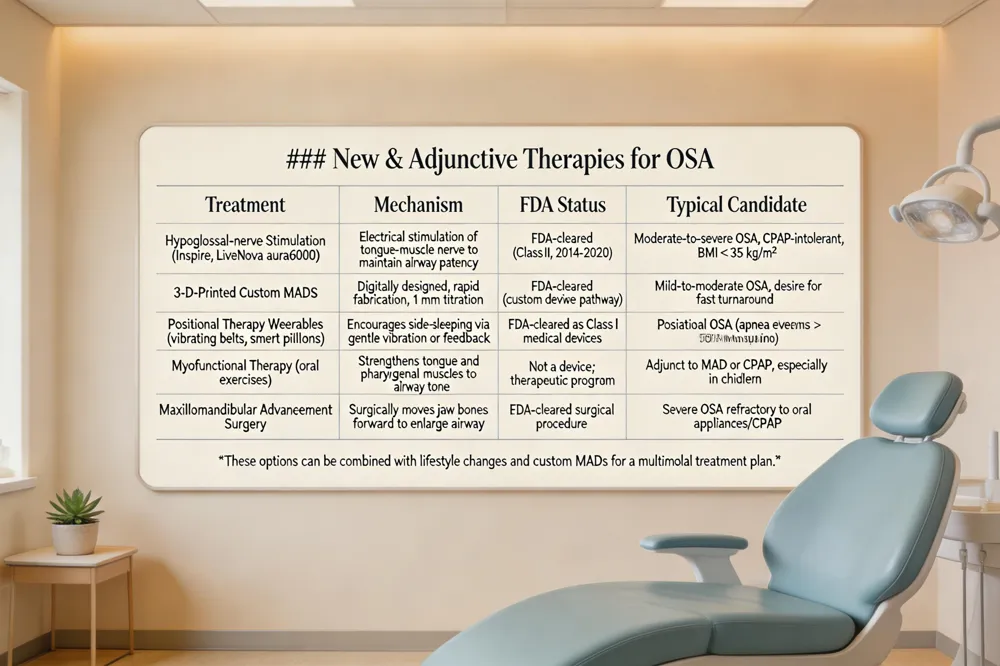
New & Adjunctive Therapies for OSA
| Treatment | Mechanism | FDA Status | Typical Candidate |
|---|---|---|---|
| Hypoglossal‑nerve Stimulation (Inspire, LivaNova aura6000) | Electrical stimulation of tongue‑muscle nerve to maintain airway patency | FDA‑cleared (Class II, 2014‑2020) | Moderate‑to‑severe OSA, CPAP‑intolerant, BMI < 35 kg/m² |
| 3‑D‑Printed Custom MADs | Digitally designed, rapid fabrication, 1 mm titration | FDA‑cleared (custom device pathway) | Mild‑to‑moderate OSA, desire for fast turnaround |
| Positional Therapy Wearables (vibrating belts, smart pillows) | Encourages side‑sleeping via gentle vibration or feedback | FDA‑cleared as Class I medical devices | Positional OSA (apnea events > 50 % when supine) |
| Myofunctional Therapy (oral exercises) | Strengthens tongue and pharyngeal muscles to improve airway tone | Not a device; therapeutic program | Adjunct to MAD or CPAP, especially in children |
| Maxillomandibular Advancement Surgery | Surgically moves jaw bones forward to enlarge airway | FDA‑cleared surgical procedure | Severe OSA refractory to oral appliances/CPAP |
These options can be combined with lifestyle changes and custom MADs for a multimodal treatment plan.
 What is the newest treatment for sleep apnea?
The latest breakthrough is hypoglossal‑nerve stimulation. FDA‑cleared devices such as Inspire and LivaNova’s aura6000 gently activate the tongue‑muscle complex during sleep, keeping the airway open and lowering the apnea‑hypopnea index (AHI). Clinical data show sustained AHI reductions and improved daytime alertness. At the same time, dentists are offering 3‑D‑printed, custom‑fit mandibular advancement devices (MADs) that can be quickly titrated, providing a comfortable, mask‑free alternative. Advanced positional‑therapy wearables and myofunctional‑therapy programs are also being integrated to fine‑tune outcomes.
What is the newest treatment for sleep apnea?
The latest breakthrough is hypoglossal‑nerve stimulation. FDA‑cleared devices such as Inspire and LivaNova’s aura6000 gently activate the tongue‑muscle complex during sleep, keeping the airway open and lowering the apnea‑hypopnea index (AHI). Clinical data show sustained AHI reductions and improved daytime alertness. At the same time, dentists are offering 3‑D‑printed, custom‑fit mandibular advancement devices (MADs) that can be quickly titrated, providing a comfortable, mask‑free alternative. Advanced positional‑therapy wearables and myofunctional‑therapy programs are also being integrated to fine‑tune outcomes.
New treatment for sleep apnea without a mask Custom MADs reposition the lower jaw forward, eliminating the need for a CPAP mask. Positional therapy—vibrating belts, specialized pillows, or wearable sensors—encourages side‑sleeping in patients whose apnea is posture‑dependent. For those who do not respond to oral appliances, hypoglossal‑nerve stimulation offers a minimally invasive, mask‑free solution. Lifestyle changes such as weight loss, reduced alcohol intake, and treating nasal congestion enhance these mask‑free strategies.
Sleep‑apnea surgery When non‑invasive options fail, surgical options like uvulopalatopharyngoplasty (UPPP) or maxillomandibular advancement are considered. These procedures are invasive, carry risks, and are reserved for carefully selected patients.
What is the 4% rule for sleep apnea? According to the 2007 AASM manual, a hypopnea event is defined as a ≥30% reduction in airflow accompanied by a ≥4% drop in oxygen saturation. This standardizes scoring and treatment decisions.
Putting It All Together
Custom oral appliances—particularly mandibular advancement devices—offer a comfortable, portable, and non‑invasive alternative to CPAP for mild‑to‑moderate obstructive sleep apnea. By pulling the lower jaw and tongue forward, they enlarge the airway, reduce snoring, improve daytime alertness, and can lower blood pressure and cardiovascular risk. The devices are fabricated from precise dental impressions or digital 3, scans, ensuring a snug fit that minimizes side effects and maximizes adherence, with compliance rates often exceeding 70 % compared with 40‑50 % for CPAP.
Tigani Family Dentistry streamlines the entire workflow: a sleep study confirms the diagnosis, the dentist takes an impression or 3‑D scan, the in‑house lab fabricates a custom‑made appliance within 1–2 weeks, and the patient receives a fitting followed by regular follow‑up visits to fine‑tune advancement and monitor oral health. This coordinated approach guarantees rapid, personalized care.
If you struggle with masks or seek a quieter, travel‑friendly solution, explore a custom oral appliance at Tigani Family Dentistry and experience a mask‑free path to better sleep.