Introduction
Choosing the right orthodontic appliance is more than an aesthetic decision; it impacts your daily routine, oral‑health outcomes, and long‑term stability of your smile. Braces and clear aligners differ fundamentally in visibility, wearability, and the types of malocclusions they can treat. Fixed braces (metal, ceramic, or self‑ligating) are non‑removable, visible, and excel at complex tooth movements, while removable clear aligners are virtually invisible, can be taken out for meals and brushing, and work best for mild‑to‑moderate cases when worn 20‑22 hours per day. This guide will walk you through the clinical considerations, lifestyle implications, and post‑treatment requirements for each option, helping you make an informed choice in partnership with an AAO‑qualified orthodontist.
Understanding Treatment Options and Costs
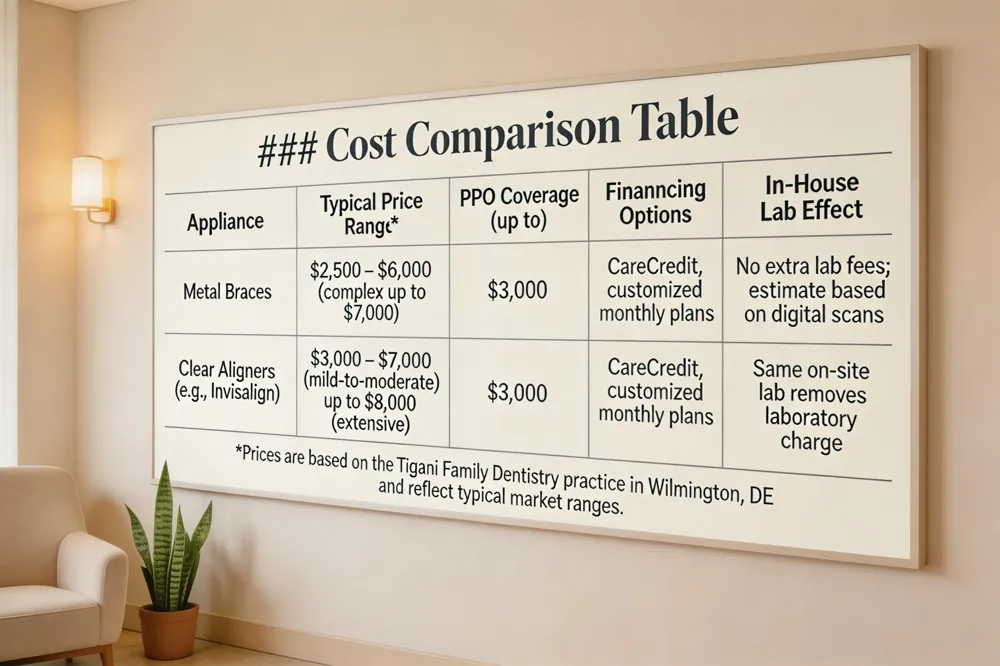
Cost Comparison Table
| Appliance | Typical Price Range* | PPO Coverage (up to) | Financing Options | In‑House Lab Effect ||-----------|----------------------|----------------------|-------------------|------------------------| | Metal Braces | $2,500 – $6,000 (complex up to $7,000) | $3,000 | CareCredit, customized monthly plans | No extra lab fees; estimate based on digital scans | | Clear Aligners (e.g., Invisalign) | $3,000 – $7,000 (mild‑to‑moderate) up to $8,000 (extensive) | $3,000 | CareCredit, customized monthly plans | Same on‑site lab removes laboratory charge |
*Prices are based on the Tigani Family Dentistry practice in Wilmington, DE and reflect typical market ranges.
 When you first consider orthodontic care, the biggest questions often revolve around price, insurance, and whether a practice’s in‑house laboratory can lower overall expenses.
Price ranges – At Tigani Family Dentistry in Wilmington, DE, traditional metal braces typically cost between $2,500 and $6,000, with more complex cases approaching $7,000. Clear‑aligner systems such as Invisalign fall in a similar ball‑park, ranging from $3,000 to $7,000 for mild‑to‑moderate movements and up to $8,000 for extensive corrections.
Insurance coverage and financing – Most PPO dental plans that Tigani works with will cover a portion of orthodontic fees—often up to $3,000—whether you choose braces or aligners. The office also offers flexible payment options, including CareCredit and customized monthly plans, to bridge any remaining out‑of‑pocket costs.
Impact of an in‑house lab – Because Tigani’s lab is on site, there are no extra laboratory fees that can inflate the final bill. Traditional works is provide a free, no‑obligation consultation that includes a detailed, individualized estimate based on your digital scans, x‑rays, and treatment goals.
Quick Q&A
- Braces Aligners price: Metal braces $2,500–$6,000; clear aligners $3,000–$7,000. PPO coverage applies to both; financing options are available.
- Braces or Aligners Cost: Metal braces $3,000–$7,000; aligners $1,500–$3,000 for mild cases, up to $8,000 for complex work. In‑house lab eliminates extra lab fees.
- Aligners vs braces cost: Aligners $3,000–$8,000; braces $2,500–$7,500. Insurance may reimburse up to $3,000; flexible payment plans and on‑site lab keep costs predictable.
Overall, your choice should balance aesthetic preferences, treatment complexity, and budget—both options are viable, and Tigani’s in‑house resources and financing help make orthodontic care more affordable.
Pros, Cons, and Effectiveness
Braces vs. Clear Aligners – Pros & Cons
| Feature | Metal/Ceramic Braces | Clear Aligners |
|---|---|---|
| Pros | Precise control of complex movements; lower cost; no patient‑compliance requirement | Virtually invisible; removable for meals & hygiene; comfortable; fewer office visits (with Invisalign) |
| Cons | Visible hardware; dietary restrictions; meticulous cleaning needed; possible soft‑tissue irritation | Requires 20‑22 hrs daily wear; compliance critical; can be lost/broken; less effective for severe cases |
| Effectiveness | Excellent for severe crowding, major bite problems, and complex malocclusions | Best for mild‑to‑moderate issues; may need braces for complex cases |
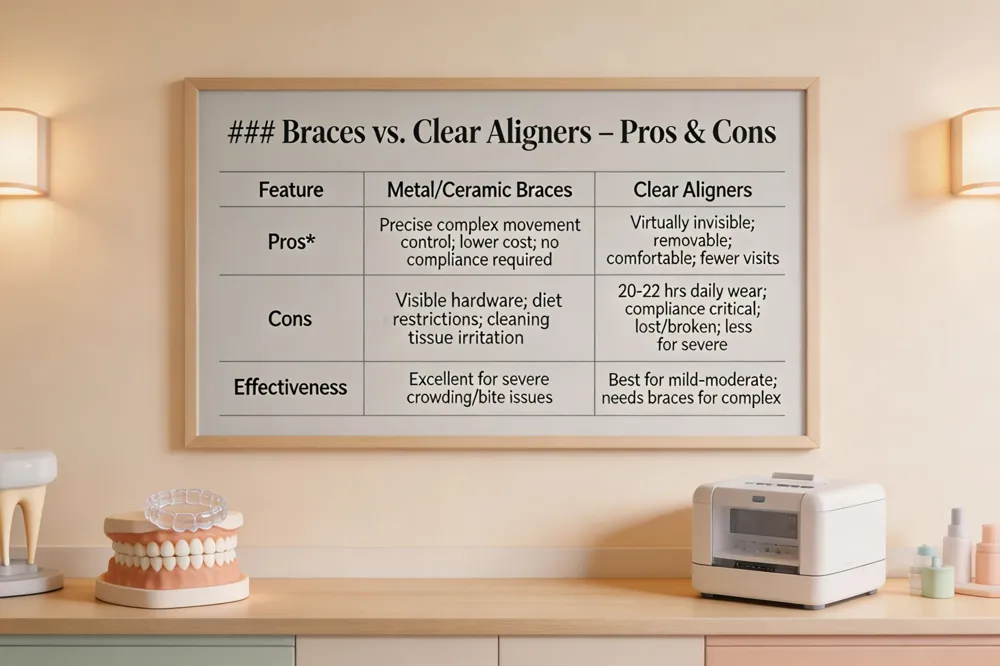 Both braces and clear aligners have distinct advantages and drawbacks. Braces, whether metal or ceramic, give orthodontists precise control over complex tooth movements, can treat severe crowding and major bite problems, and are often the more affordable option. Their downsides include a visible appearance, dietary restrictions (hard, sticky, chewy foods), and the need for meticulous brushing around brackets and wires, which can cause soft‑tissue irritation. Clear aligners are virtually invisible, removable for meals and oral hygiene, and generally feel more comfortable because they lack brackets and wires. However, they rely heavily on patient compliance—aligners must be worn 20–22 hours daily, and any missed wear can lengthen treatment or compromise results. Aligners can be lost or broken, may trap food particles if not cleaned properly, and are less effective for severe or complex cases, often requiring traditional braces for optimal outcomes. Invisalign is a brand of clear aligners that uses advanced 3‑D planning and offers fewer office visits, but it shares the same compliance requirements. In summary, braces excel in treating intricate malocclusions without patient‑discipline concerns, while clear aligners provide a discreet, flexible option for mild‑to‑moderate issues. A thorough evaluation by an AAO‑qualified orthodontist, such as at Tigani Family Dentistry, will determine which appliance best matches the patient’s diagnosis, lifestyle, and budget.
Adult Orthodontics and Lifestyle
Adult‑Focused Treatment Considerations
| Consideration | Clear Aligners | Metal/Ceramic Braces |
|---|---|---|
| Aesthetic | Virtually invisible | Visible (metal) or less visible (ceramic) |
| Dietary Restrictions | None (removable) | Must avoid hard, sticky, chewy foods |
| Oral Hygiene | Easy to brush/ flossoss before each insertion | Requires meticulous cleaning around brackets after every meal |
| Comfort | No brackets/wires; less soft‑tissue irritation | Possible irritation from wires/brackets |
| Treatment Speed | 12‑18 months for mild‑to‑moderate cases | 18‑24 months, especially for complex problems |
| Cost (upfront) | Slightly higher for many cases | Generally cheaper upfront |
| Compliance | Must be worn 20‑22 hrs daily | No wear compliance needed |
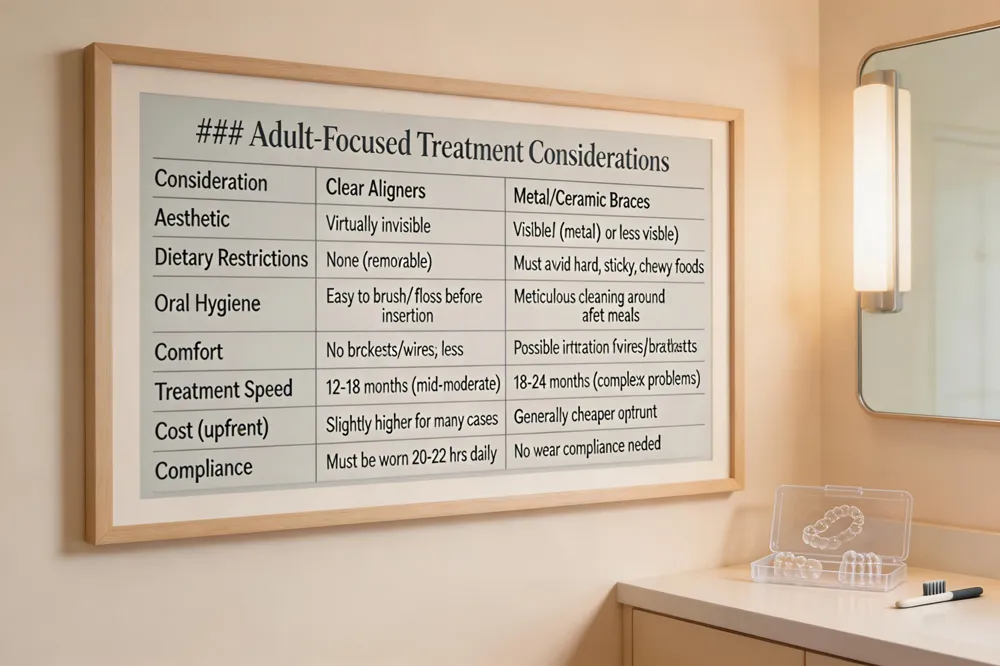 Aesthetic and practical considerations for adults. Patients seeking a discreet, comfortable solution often choose clear aligners because they are virtually invisible, removable for meals, and easy to keep clean. Traditional metal or ceramic braces are fixed, can handle more complex movements, and may achieve results slightly faster, but they are more noticeable and require dietary restrictions.
Braces vs. aligners for adults: Adults who want a discreet option usually prefer clear aligners, which are virtually invisible, removable for meals and oral hygiene, and cause less soft‑tissue irritation. Traditional braces, whether metal or ceramic, stay fixed to the teeth, can handle more complex movements such as severe crowding or major bite corrections, and often achieve results a bit faster. Aligners typically require diligent wear of at least 22 hours a day and may be slightly more expensive, while braces are generally the cheaper upfront choice. Both treatments are effective when overseen by a qualified orthodontist, and most insurance plans cover a portion of either option.
Clear aligners benefits for adults: They allow a professional appearance throughout treatment, eliminate food restrictions, improve oral hygiene, reduce irritation, and often require fewer office visits, fitting busy adult schedules.
Do clear aligners work for overbite: Yes, for mild to moderate overbites they apply gentle, progressive pressure via a series of custom trays, usually in 6‑18 months. Severe cases may need traditional braces or additional appliances.
Clear aligners benefits for teeth: Clear aligners are invisible, removable, promote better brushing and flossing, reduce gum irritation, and can alleviate TMJ discomfort while delivering functional alignment.
Treatment Process, Compliance, and Retention
Process & Retention Overview
| Aspect | Clear Aligners | Fixed Braces |
|---|---|---|
| Wear Schedule | 20‑22 hrs daily; trays changed every 1‑2 weeks | Continuous wear; adjustments every 4‑6 weeks |
| Appointment Frequency | New trays every 6‑8 weeks | Adjustments every 4‑6 weeks |
| Oral Hygiene | Removable → normal brushing/flossing before each tray | Meticulous brushing/flossing around brackets after meals |
| Retention | Full‑time retainers 6 months → nightly thereafter | Full‑time retainers 6 months → nightly thereafter |
| Typical Treatment Duration | 12‑18 months for mild‑to‑moderate cases | 18‑24 months, especially for complex cases |
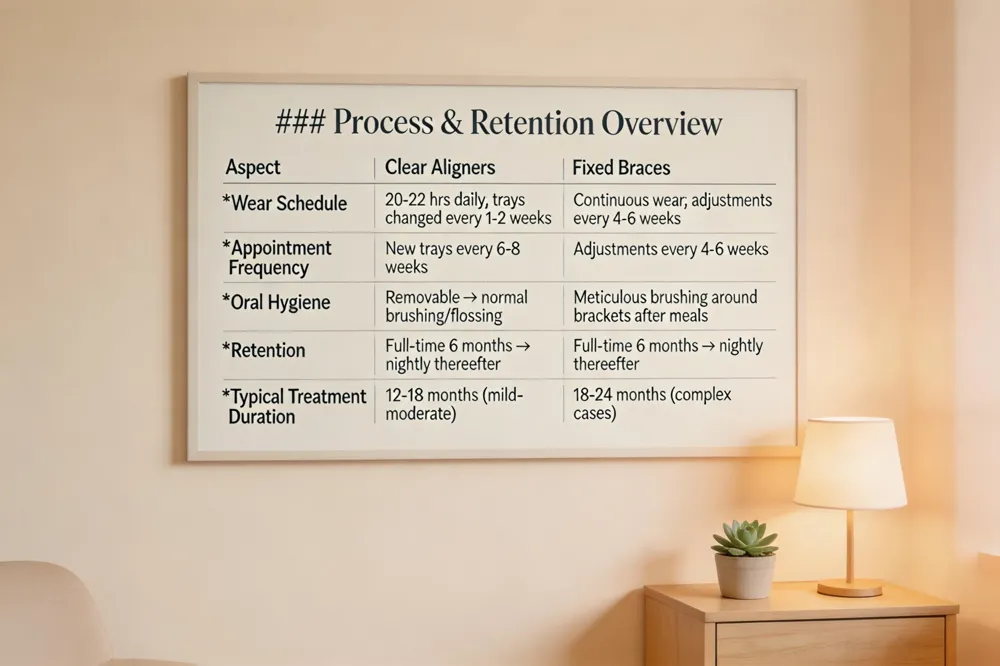 Wear schedule and appointment frequency: Clear aligners must be worn 20‑22 hours daily and are changed every 1‑2 weeks; patients see the orthodontist for new trays every 6‑8 weeks. Fixed braces stay on the teeth and require adjustments roughly every 4‑6 weeks.
Oral hygiene differences: Aligners are removable, allowing normal brushing and flossing before each insertion, while braces demand meticulous cleaning around brackets and wires after every meal.
Retainers after active treatment: Once the active phase ends, both options transition to retainers after treatment—usually full‑time for six months, then nightly—to prevent relapse.
Q: Clear aligners vs retainers? A: Aligners move teeth during treatment; retainers hold the final result afterward. Aligners are thicker for movement, retainers are thinner for stability.
Q: Do clear aligners actually work? A: Yes, when planned and supervised by a qualified orthodontist, they reliably correct mild‑to‑moderate issues if worn 20‑22 hours daily.
Q: Aligners vs braces which is faster? A: Aligners often finish mild‑to‑moderate cases in 12‑18 months, while braces typically need 18‑24 months, especially for complex problems.
Conclusion
At Tigani Family Dentistry, every patient receives a comprehensive, orthodontist‑led evaluation—using X‑rays, digital scans and 3‑D modeling—to determine whether clear aligners or traditional braces will best address their specific malocclusion. This personalized approach lets families weigh the three key factors that drive a decision: the overall cost (including insurance coverage and flexible financing), the aesthetic preferences (invisible aligners versus discreet ceramic brackets or colored metal bands), and the complexity of the case (mild crowding can often be treated with aligners, while severe bite issues may require fixed braces). For those interested in moving forward, the next step is to schedule a free or low‑cost consultation at Tigani’s Wilmington office, bring dental insurance information, and discuss treatment timelines, payment options and retainer plans. With a clear diagnosis and a tailored plan, patients can confidently choose the orthodontic solution that fits their lifestyle and smile goals.