Why Facial Tension and TMJ Matter
Stress often triggers subconscious clenching or grinding (bruxism), which over‑works the masseter and temporalis muscles. This chronic hyperactivity creates a cycle of muscle tightness, facial tension, and increased pressure on the temporomandibular joint, leading to pain, headaches, and limited jaw opening. Early detection by a dental team is crucial: routine exams can reveal worn tooth surfaces, morning jaw stiffness, or clicking sounds before joint damage occurs. Dentists can assess muscle tone, recommend custom night guards, and refer for adjunctive therapies such as physical therapy or,‑toxin injections. By intervening early, the team helps break the stress‑muscle‑TMJ loop and preserves both oral health and facial comfort.
Anxiety‑Related Facial Tension and Muscle Tightness
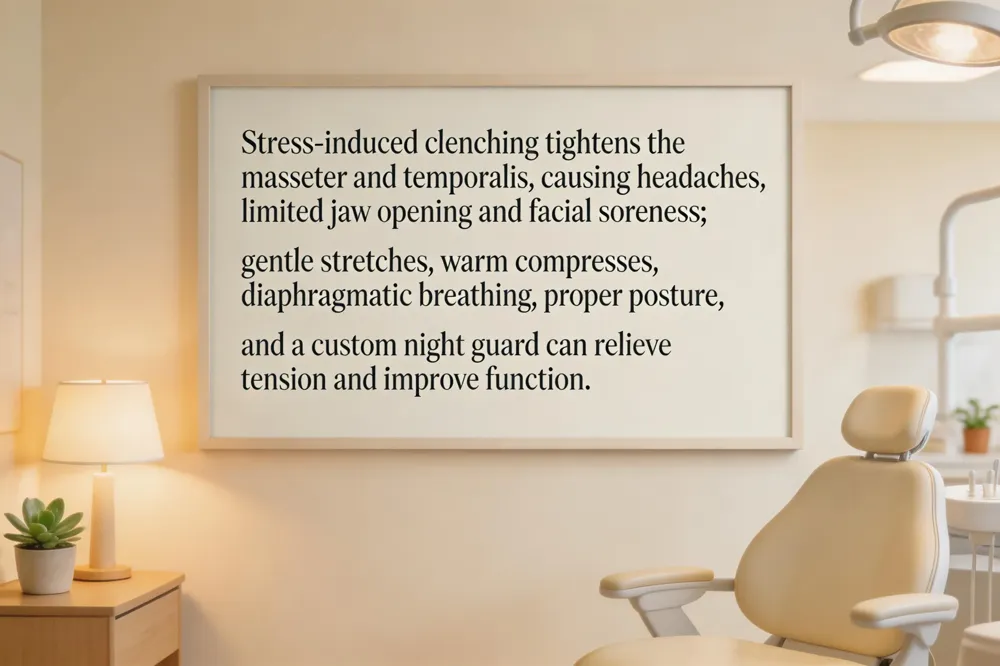 Stress‑induced clenching and neck‑muscle strain are common when anxiety triggers subconscious jaw tightening. The masseter and temporalis become over‑active, leading to headaches, limited opening, and facial soreness. Gentle jaw‑stretching – opening the mouth wide, then slowly moving the jaw side‑to‑side while keeping shoulders relaxed – restores length to the muscles. Pair this with a warm compress on the cheeks and a brief diaphragmatic‑breathing pause to improve blood flow. Good workstation posture (screen at eye level, shoulders back) prevents habitual neck tension that feeds back into the jaw.
How to relieve facial tension from anxiety – Begin the slow stretch routine, use a warm compress, practice deep‑breathing, and consider a custom night guard to protect the jaw while you sleep. Persistent pain or frequent headaches merit a dental evaluation.
Tightness in face muscles – Often stems from stress‑related clenching, bruxism, or bite imbalance. Tigani Family Dentistry can assess bite alignment, recommend night guards, orthodontics, or targeted Botox/Xeof skin‑tightening for lasting relief.
How to relax face and jaw muscles – Diaphragmatic breathing, gentle mouth‑opening stretches, warm‑compress massage, and regular posture breaks keep muscles supple.
How to get rid of facial tension? – Combine stretches, self‑massage, stress‑management (meditation, exercise), and a night guard. For chronic tension, professional Botox injections at Tigani Family Dentistry can safely diminish over‑active muscles.
Facial tension symptoms – Tightness in jaw/cheeks, frequent clenching, tension‑type headaches, reduced opening, and neck/shoulder discomfort. If these interfere with daily life, seek a comprehensive dental exam.
Botox Mechanics, Dosage, and Injection Sites for TMJ
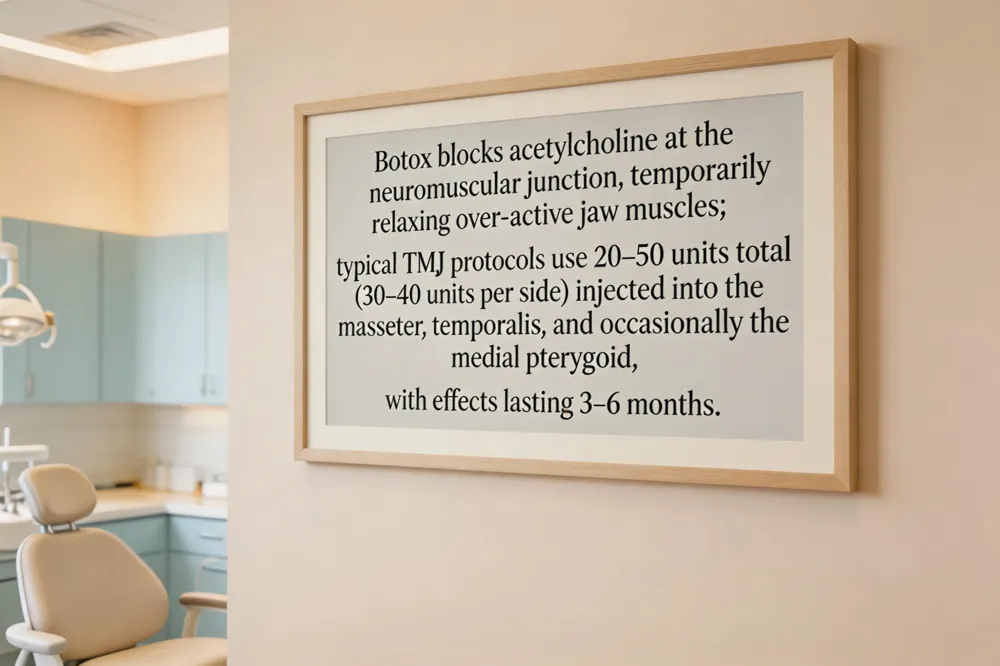 Botox (onabotulinumtoxinA) works by blocking acetylcholine release at the neuromuscular junction, temporarily paralyzing over‑active jaw muscles and relieving tension. For TMJ, dentists usually inject 20–50 units total—often 30–40 units per side—targeting the bulkier masseter and, when needed, the temporalis. Precise mapping yields about five to seven injection points per side: superficial and deep masseter points and several temporalis points; occasional medial pterygoid injections (≈10 units) are added if that muscle contributes pain. Effects begin within 3–7 days, peak at 2–4 weeks, and last 3–6 months, after which repeat dosing restores control. Patients report reduced jaw pain, fewer tension‑type headaches, and a modest slimming of a square jawline as the masseter bulk diminishes. Side effects are mild—bruising, temporary chewing weakness, or brief facial asymmetry—that resolve within weeks; permanent facial‑nerve damage is exceedingly rare when performed by an experienced injector. Tigani Family Dentistry integrates Botox with night guards, physical therapy, and stress‑management for a comprehensive, non‑surgical TMJ plan.
Clinical Outcomes: Before‑and‑After Visuals and Patient Experiences
 Photographic evidence of muscle reduction shows a pronounced, square lower face before treatment, with visible masseter bulk and clenching marks. After Botox injections into the masseter and temporalis, the muscles appear slimmer and the jawline tapers, giving a more refined contour. Patient‑reported pain scores drop dramatically; most studies record a 30‑60 % reduction within two weeks, and headache frequency falls by half. Functional relief accompanies aesthetic change—chewing becomes easier, mouth opening improves, and tension‑type headaches recede. Before‑and‑after images of facial tension reveal tightness in the jaw, temples and cheeks that softens after targeted relaxation, while Botox‑induced facial asymmetry corrects uneven brow or cheek contours, creating a balanced look without compromising expression. In cases of synkinesis, pre‑treatment photos display strained, involuntary movements; post‑treatment shots show smoother, more natural facial dynamics, with objective grading scores improving for several months. The therapeutic effect typically lasts three to six months, after which a maintenance injection restores the muscle tone and visual benefits. Schedule sessions every 4‑5 months for results.
Integrating Botox with a Comprehensive TMJ Care Plan
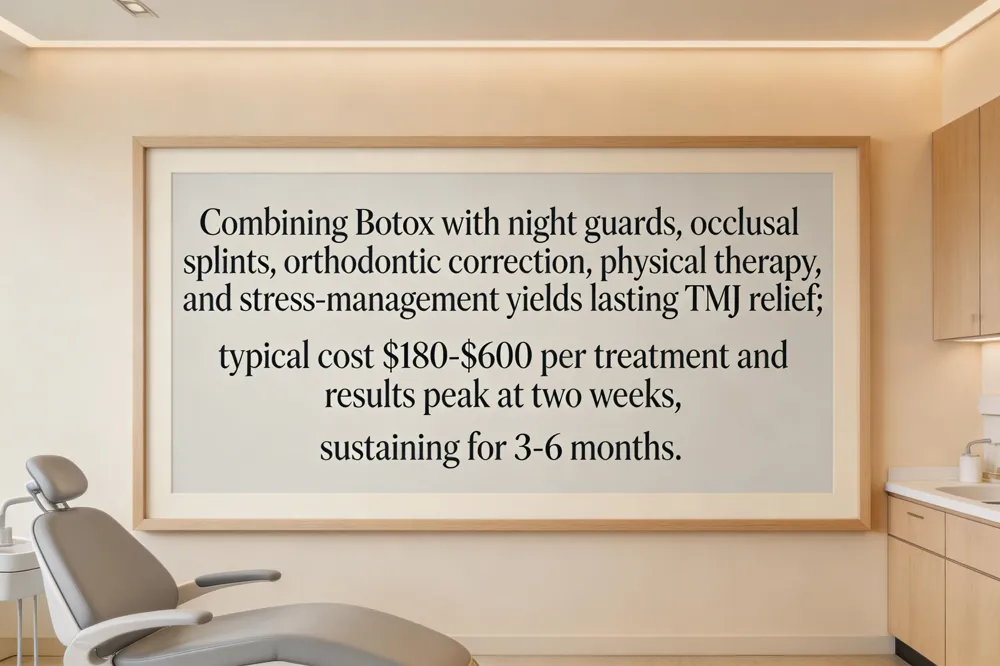 Integrating Botox into a TMJ program combines muscle relaxation with protective appliances and therapy. Night guards and occlusal splints, often made in‑house, prevent nocturnal clenching and let injected muscles rest. Orthodontic options like Bioclear can correct bite misalignment that drives overactivity. Physical therapy and stress‑management—stretching, posture correction, relaxation—support long‑term relief. Our in‑house lab speeds night‑guard production and ensures precise fit.
Jaw fatigue treatment: warm compresses, gentle stretches, and a custom night guard reduce strain; persistent pain may need anti‑inflammatory meds or PT. One‑sided tightness: evaluate bite, bruxism, and muscle tension; seek immediate care for numbness. Facial tension relief: stretches, massage, stress reduction, and optional Botox for over‑active muscles. Botox is recommended by trained dentists, offers 3‑6‑month relief, may be covered if medically necessary, and typically costs $180‑$600 per treatment. Tightness after injection fades by day 6‑9, peaking at two weeks.
Putting It All Together for a Pain‑Free Smile
At Tigani Family Dentistry every patient begins with a personalized evaluation that assesses jaw mechanics, muscle activity, stress factors, and any underlying joint pathology. Using those findings, the dentist designs a coordinated plan that may combine FDA‑approved Botox injections into the masseter and temporalis muscles, a custom‑fitted night guard to protect teeth and reduce grinding, and targeted physical‑therapy or stress‑management techniques to restore balanced function. Throughout the process the practice emphasizes a family‑focused, comfortable environment—providing in‑house lab support, flexible scheduling, and clear communication—so patients feel confident and cared for while achieving lasting, pain‑free smiles.